Showing posts with label assemblage. Show all posts

Wednesday, July 16, 2014

SUMMER IS EASY AND THE FISH ARE JUMPING

ASHEVILLE IN THE BLUE RIDGE AND SMOKEY MOUNTAINS

A BLUE MIST HANGS AND THE CLOUDS DRIFT LOW

Family Farms Leicester, North Carolina 

SUMMER FLOWERS ARE BLOOMING, THE CAROLINA LILIES, THE 

RHODODENDRON IS FLOWERING IN WHITE CLUMPS ALONG THE STEEP 

MOUNTAINSIDE, COWS ARE LAZILY EATING ABUNDANT GRASSES, CROWS SIT 

AMONG THE CORN STALKS THAT WILL LATER BE FEED FOR ANIMALS FOR THE

WINTER, TRACTORS ARE PLOWING, ROWS ARE MOUNDING, SEEDS PLANTED 

AND THE SUMMER CROPS ARE FLOURISHING

Carolina Lilly as I call it  


It is easy to be lazy in the summer as the line from "Porgy and Bess" says.  Summertime, when the living is easy.  I have posted less because I have been under time constraint to finish a major piece for an art show.  It is now done and shipped.  It is in my mind to expand the theme I started working with in this last piece.  I have been working with assemblage and high relief collage in themes that revolve around immigration, difference in cultures and cultural blending of people and nations.  Another area of interest is communication.  My Mother for the past 11 years has lived with the effects of a stroke that left her with sever communication problems and aphasia.  I have learned so much from my Mother's condition these past 11 years while I have been intensely involved in her care and her adjustment to her situation.  Also having worked in special education half my career as an art teacher has given me experience with severe handicaps of all kinds that effected their ability to communicate.  These themes are fascinating to me..how we communicate, how we perceive communication, how we use parts of our brains and not others, and what happens if part of your brain is damaged, but you can communicate with what is working?  We also communicate differently depending on our up bringing, experiences and our culture.  When I taught overseas in the Philippines I had to take a course in culture communication and how to understand cultural sensitivity.  So this is the areas I am going to explore in my art this summer and fall while at the mountain studio.  That is if I don't get to lazy while the fish are jumping!

Saturday, June 28, 2014

A DAY IN RABBIT'S MOON STUDIO


IN MY ASHEVILLE STUDIO I AM SURROUNDED BY ALL 

THINGS NATURAL

THE LIGHTS AT NIGHT ATTRACT MOTHS AND JUNE BUGS

SPIDERS ARE CONSTANTLY WEAVING WEBS EVERY 

NIGHT SPUN BY THE MOONLIGHT, TREES HOUSE HUGE HORNETS NETS,

AND LICHEN GROW ON BARK AND LIMB.  


 THE STUDIO DOORS OPEN

AND I CAN SEE LEAVES DANCE IN THE WIND, BIRDS LOOKING TO SEE IF I FILLED 

THE FEEDERS AND HOP ABOUT

I START MY DANCE OF ART AND COLLAGE 

LIKE A PUZZLE THAT NEEDS TO BE PONDERED AND SOLVED.

 I ARRANGE AND ORGANIZE, THEN 

MEAURE AND THNK AND ARANGE 

AGAIN, CUT, SAW, AND GLUE.    VINCI, THE STUDIO DOG, KEEPS 

ME CONSTANT COMPANY.
Studio Shop

view outside…the red Japanese maple is growing

 RAVENS AND CROWS ARE THE SMARTEST SPECIES NEXT TO MAN ACCORDING TO 

THE LATEST STUDIES.  THEY FASCINATE ME EVEN IN THE 


EARLY VIKING FOLKLORE RAVENS PLAY AN IMPORTANT ROLE


FUNGI, RUSTED METAL, SPIDERS, JUNE BUGS AND


MOTHS ALL LAY ON THE STUDIO TABLE TO FIND 


THEIR WAY INTO THE NEXT PIECE OF JUST TO ADD


 TO THE BEAUTY OF THE ROOM


TRANSFER IMAGE

transfer didn't work on some material, so I drew it myself


DOING AN ASSEMBLAGE OR COLAGE IS LIKE A PUZZLE WHERE THOUSANDS OF 

POSSIBLE ARRANGEMENTS OPEN TO YOUR TOUCH, MOVE HERE, ADD THIS, TURN 

THAT, AND SO IT GOES UNTIL THERE IS CLICK IN MY MIND THAT SAYS DONE.


Friday, June 6, 2014

The Birth Process of an Art Piece

TRANSLITERATION OF CULTURE

That will be the title of my next piece.  It will be an assemblage of antique shipping molds from England, rusted metal, found objects of various and sundry places, and the basic format and style will be African tribal.  
This is an unusual start for me.  Usually the title comes last, but as I am an intuitive artist I go where the piece leads me. Everyday I think about the piece more forms in my mind and I hunt for the objects that are seeking their way to me.  Yesterday walking through a lumber yard here in Asheville and I found a smashed rusted metal basket that may find its way into the piece.  I also found a worn tag, that was sun aged and weather worn the seemed to call to me.  


The collection starts

antique gas mask

Adding bit by bit to the studio pile, lots to choose froml

Copper part from a solar roof panel

Antique English Ship making mold
African Fetish Sculpture in Montreal, Museum 
The tribal piece above and others will act as a guide to the assemblage I am in the process of designing. If you look closely you will see, old nails, and bits of found metal.  One area I love in the rectangle in the center where an image can go.  I am not thinking at this point of a whole body figure, but more of a bust.  We will see where the process of creation takes me though.

Friday, May 2, 2014

TIME TO START ART

I am gathering my objects for a new assemblage.  It takes me awhile, this process of mine.  Things seem to cook awhile in my mind before they are ready.  Now I gather, then I think, then I research, then I start the dance of creating.  Every artist has their own way, that seems to be mine.  Here are the gathering of objects I will begin my work with. I will take you with me as I progress on this assemblage for an upcoming show.

Hat form

various old wooden and rusted items and old English ship building forms

Palm fibers

Computer board, Turkish hassle , rusty things

Old gas mask

wooden shoe form and crow

Piece from a friends solar water system

ship building form

old metal funnel


Wednesday, July 3, 2013

The Influence of Experience on the Creation of Art

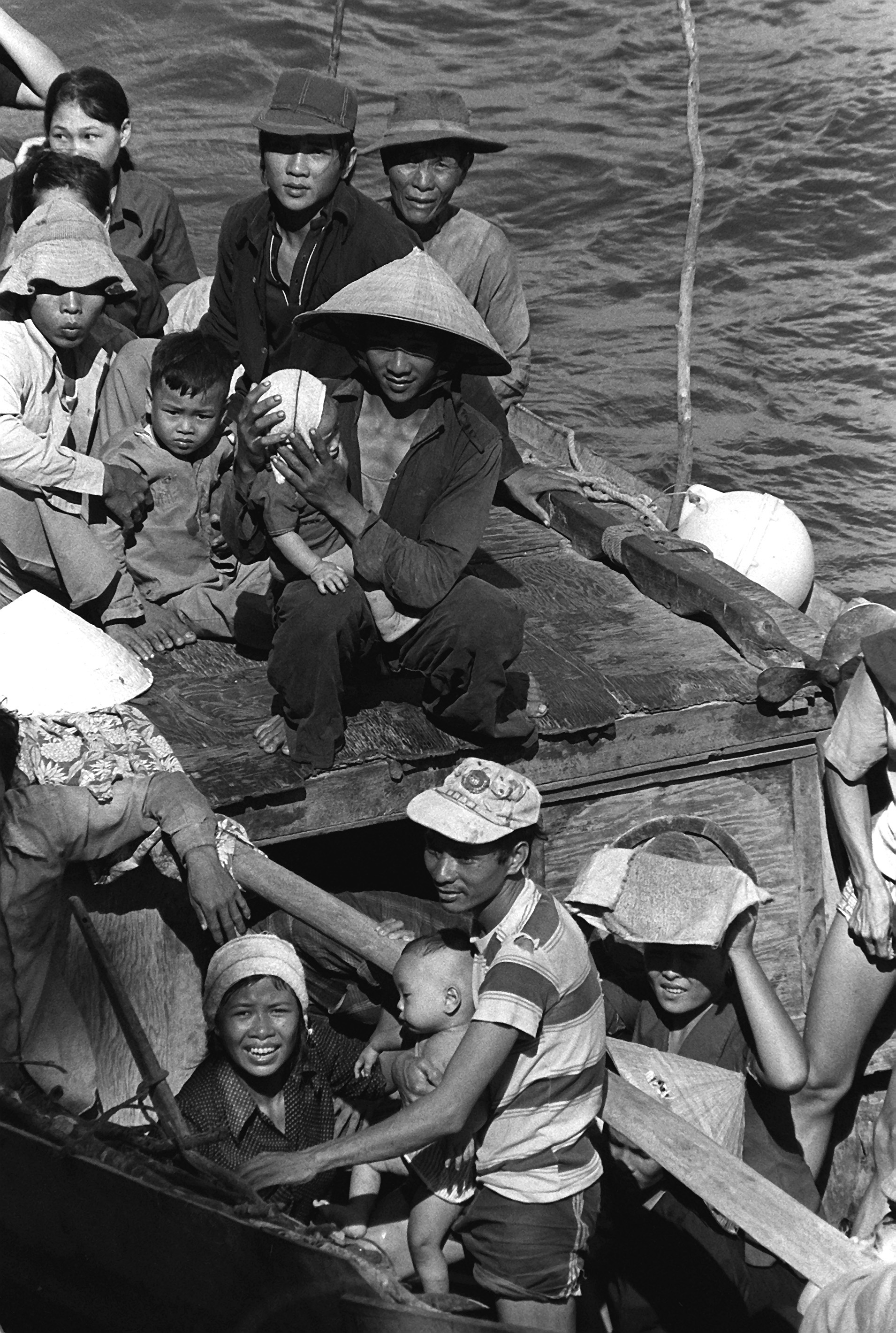
Vietnamese Boat Refugees coming in to Subic Bay, Philippines, google image

The impetus for my assemblage began in an experience I had in the Philippines in 1975 and my life long reflection of what home meant.

The year was 1975. I was a young art teacher in my twenties working for the Department of Defense in the Overseas Education program that serves American Military personnel and their children. My assignment was Subic Bay Naval Base in the Philippine Islands.  The first year I arrived Subic Bay was still an active war base; it was the last year of the Viet Nam war.  Much happened during the three years I taught art there; Marcos, the President of the Philippines declared Martial Law and virtually became a dictator, Imelda counted her 7,000 shoes, and then came the fall of Viet Nam.  At first the wealthier people flew out holding gold bars and people with connections were helicoptered out the last few days. The common person got on anything they could that would float and took out across the South China Sea in desperate hope of escape from war and tyranny. They floated on boat and raft into the bay of Subic Bay by the thousands.  The Philippine Government was sure that Viet Nam would bomb Subic Bay Naval Base that housed all the armaments for the Navy for the war.
Boats so over loaded, they seemed impossible to still be
afloat.
 google image
 They would not allow the refugees to come on the mainland but  they did come to
Grande Island sitting right off the coast of the base.  Teachers were asked to help process the refugees as they came in.  In a period of three weeks we processed 70,000(I have found varying numbers reported, from 39,000 to 60,000, the 70,000 is only from my memory of what I was told at the time) people who were then sent on to 
refuge centers in Guam and the USA.
  
This was one of the most formable times of my life.  I remember clearly asking people questions with an interpreter while they were standing in long lines waiting so quiet it seemed erie.  Frozen in my memory is one woman holding her most prized possession, her tin wash basin! The children cried constantly, and I asked one of the mothers, why they were all crying so much.  She said all their lives they had heard the explosions and gun fire of war, and it was too quiet for them. 

That time marked me deeply, seeing people lose what had been their home, having to leave everything behind they knew and loved.  I began to think about how it would  be if that happened to me, if I were torn from my family, my mother, my home and all I cherished, the desperation and courage it would take to risk every thing to leave not knowing where home would be next.
  
Vietnamese Refugee arriving in Subic Bay
google image
A year later I returned to the United States and returned to teaching in St. Petersburg, Florida.  It was not long after that I was asked to teach at a school that was a center for Vietnamese refugees we were now calling boat people.  The center was to assist children who spoke little or no English in their education and help them adapt to a new culture.  Many of the aides assisting were Vietnamese as well.  It once again threw me into a world of these engaging people that were torn from their country to build a home in a new place and culture.  Many of the teachers aides had been principals, teachers, doctors or lawyers in Viet Nam, but our teachers did not always ask and  just assumed because they could not speak English well, they were uneducated and lower class.  It frustrated the aides greatly, the children were puzzled and I was amazed at the lack of understanding of the American staff.  I think the aides and I began to understand this was going to be the typical reaction they were going to receive in this new culture.  The children were immediately given the message their adults were not respected and therefore they were not worthy either.  

All these experiences left me with the life long pondering of what it would be like to lose one's home and have to build another life. And it also led me to think deeply about the ideology of what home is. Is it a place? Is it people? Is it more complicated than all of that?  The journey is difficult, and acceptance is not guaranteed.  Our country is a country of immigrants and we are a nation of people who have left behind a home we knew to a home we chose.  I remember reading a quote recently written by a British author who when he came to America noticed all Americans had a lonely look and he thought it was a genetic memory of lands and home.  It struck me from this quote, are we inherently unsettled people, who generation after generation have a national unconscious mind of lost people.  It is something to think about.  
In this Surrealistic assemblage you will see many references to home through symbols of different kinds. I will leave it to you to interpret these symbols as your experiences bring you to them. Mine will be different, but I wanted to crack open a door to give you insight into the creation of this piece...Home in many languages.
Elizabeth Gordon

Tuesday, December 6, 2011

Collage/Pieces of our Lives

Collage


Is oft thought of as a sub class to painting, drawing and sculpture. It is truly interesting that part of the art world has taken that position with its wonderful rich history. I have loved collage most of my life. I think it actually started with watching my Mother put together family photo's with clipping out bits of embroidery or lace to enhance the presentation. I can remember how carefully she would set aside pieces of her favorite bits of material and thoughtfully arrange each vignette. I watched with awe, and remember thinking I didn't know you were allowed to combine photographs with other things. I had not seen it done in anyone else's home or other place. It was unique to me and seemed to allow me to think differently.
Africa is not always given its due to the history of collage. Picasso is given credit and Braque, but it is not always mentioned that Picasso drew many of his influences came from African art. Rauschenberg, Johns, Cornell were artist who brought collage into the modern art world. Now it is a mainstay trending over to assemblage and all types of mixed media and found object collage. Curators and judges no longer cast an eye of disdain, as in the past, but have accept video artists, installations and other innovations.
The history of art is change, innovation, and exploration. Bright colors were thought to be a horror is certain periods of art, impressionism was thought unskilled art, and Van Gogh's work was not accepted in his life time. So art is meant to be in constant evolution and more that the realistic representation of a scene or object. Art is meant to challenge us, make us think, and to inspire discovery and exploration.
For me collage and assemblage are the archeology of the present and future. There will be a time when people study our objects for hints of how we lived as a civilization. I love old, worn, used, touched, lived with objects: they speak to be of times just past and times present that are moving into the past. It is the visual poetry of our lives, our beings journey in time. We leave a mark, we leave evidence we were here, we worked, we lived, and we existed on this earth at this time.

Saturday, October 22, 2011

Joseph Cornell/One of the Pioneers of the Assemblage

Cornell's Universe


Joseph Cornell's boxes were worlds unto themselves.

They were dreams and poetry all wrapped up together. Here is another website with photographs of a large number of

Cornell's boxes. I find a common love of old things, but not because it was garbage, but because these bits of the past are precious and things once loved and treasured. They speak to us like time travelers who reach into our world of the future and say, " I once was special, I once was held and adored". Perhaps it is nostalgia when we see something that is aged to sepia tones or crumbling a bit on the edges, or just rusted a bit...but what ever it is, these things that are fading away into another time can be appreciated and revered for what they were. They can teach us lessons if we but listen. I think that is the world I share with Cornell. When you look at his boxes, remember all the art shows, galleries, and artist you have seen-any where you see an artist that has used a box, an assemblage , or collage Cornell's influence is there.


http://www.ibiblio.org/wm/paint/auth/cornell/(clickable in right hand column Websites of interest)

Joseph Cornell/The Artists Artsit

Joseph Cornell
I want you to get to know one of my favorite artist and influences in mixed media art. Cornell was one of the first artists to use the box as his canvas for art. He built miniature worlds inside old boxes with scrapes of paper and found objects. He rarely sold his work, but gave it to friends and family. His work is like visual poetry and also a bit like a dream world. His work was collected for years by other famous artists. After his death his work was salvaged by well known NYC artists and stored in a warehouse so that would not be lost. Now you find his work at MOMA and the Chicago Art Institute among other places. I will post more articles and images for you to enjoy and for us all to share. Cornell has influenced every artist, whether they know it or not, that has used boxes, collage, assemblage, or found objects in the making of art. He is not widely known, but his influence is considerable.
http://info-poland.buffalo.edu/classroom/poster/poster.html(clickable form in websites of interest column on right hand side of the blog.
Related Posts Plugin for WordPress, Blogger...