Showing posts with label Philippines. Show all posts

Wednesday, July 3, 2013

The Influence of Experience on the Creation of Art

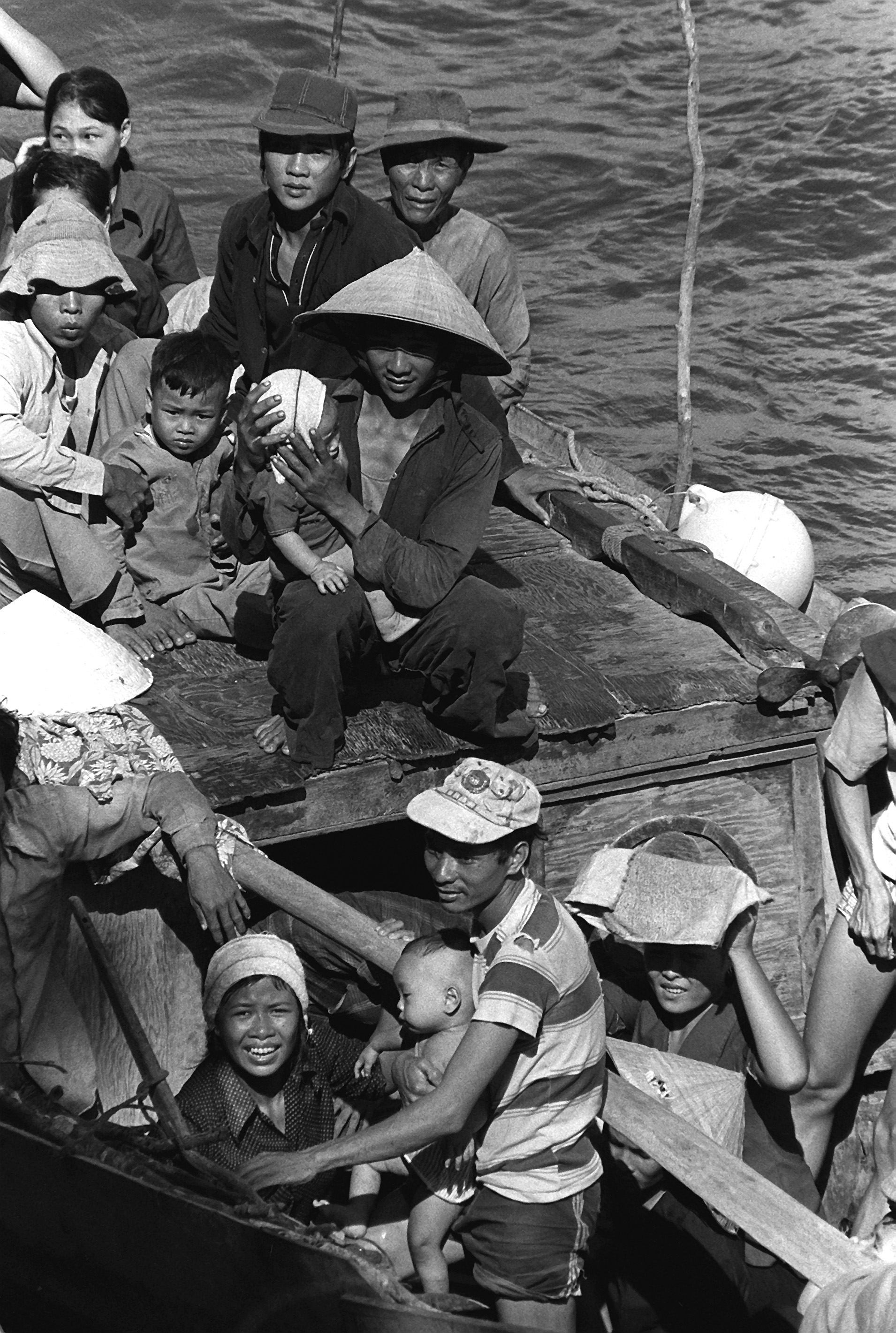
Vietnamese Boat Refugees coming in to Subic Bay, Philippines, google image

The impetus for my assemblage began in an experience I had in the Philippines in 1975 and my life long reflection of what home meant.

The year was 1975. I was a young art teacher in my twenties working for the Department of Defense in the Overseas Education program that serves American Military personnel and their children. My assignment was Subic Bay Naval Base in the Philippine Islands.  The first year I arrived Subic Bay was still an active war base; it was the last year of the Viet Nam war.  Much happened during the three years I taught art there; Marcos, the President of the Philippines declared Martial Law and virtually became a dictator, Imelda counted her 7,000 shoes, and then came the fall of Viet Nam.  At first the wealthier people flew out holding gold bars and people with connections were helicoptered out the last few days. The common person got on anything they could that would float and took out across the South China Sea in desperate hope of escape from war and tyranny. They floated on boat and raft into the bay of Subic Bay by the thousands.  The Philippine Government was sure that Viet Nam would bomb Subic Bay Naval Base that housed all the armaments for the Navy for the war.
Boats so over loaded, they seemed impossible to still be
afloat.
 google image
 They would not allow the refugees to come on the mainland but  they did come to
Grande Island sitting right off the coast of the base.  Teachers were asked to help process the refugees as they came in.  In a period of three weeks we processed 70,000(I have found varying numbers reported, from 39,000 to 60,000, the 70,000 is only from my memory of what I was told at the time) people who were then sent on to 
refuge centers in Guam and the USA.
  
This was one of the most formable times of my life.  I remember clearly asking people questions with an interpreter while they were standing in long lines waiting so quiet it seemed erie.  Frozen in my memory is one woman holding her most prized possession, her tin wash basin! The children cried constantly, and I asked one of the mothers, why they were all crying so much.  She said all their lives they had heard the explosions and gun fire of war, and it was too quiet for them. 

That time marked me deeply, seeing people lose what had been their home, having to leave everything behind they knew and loved.  I began to think about how it would  be if that happened to me, if I were torn from my family, my mother, my home and all I cherished, the desperation and courage it would take to risk every thing to leave not knowing where home would be next.
  
Vietnamese Refugee arriving in Subic Bay
google image
A year later I returned to the United States and returned to teaching in St. Petersburg, Florida.  It was not long after that I was asked to teach at a school that was a center for Vietnamese refugees we were now calling boat people.  The center was to assist children who spoke little or no English in their education and help them adapt to a new culture.  Many of the aides assisting were Vietnamese as well.  It once again threw me into a world of these engaging people that were torn from their country to build a home in a new place and culture.  Many of the teachers aides had been principals, teachers, doctors or lawyers in Viet Nam, but our teachers did not always ask and  just assumed because they could not speak English well, they were uneducated and lower class.  It frustrated the aides greatly, the children were puzzled and I was amazed at the lack of understanding of the American staff.  I think the aides and I began to understand this was going to be the typical reaction they were going to receive in this new culture.  The children were immediately given the message their adults were not respected and therefore they were not worthy either.  

All these experiences left me with the life long pondering of what it would be like to lose one's home and have to build another life. And it also led me to think deeply about the ideology of what home is. Is it a place? Is it people? Is it more complicated than all of that?  The journey is difficult, and acceptance is not guaranteed.  Our country is a country of immigrants and we are a nation of people who have left behind a home we knew to a home we chose.  I remember reading a quote recently written by a British author who when he came to America noticed all Americans had a lonely look and he thought it was a genetic memory of lands and home.  It struck me from this quote, are we inherently unsettled people, who generation after generation have a national unconscious mind of lost people.  It is something to think about.  
In this Surrealistic assemblage you will see many references to home through symbols of different kinds. I will leave it to you to interpret these symbols as your experiences bring you to them. Mine will be different, but I wanted to crack open a door to give you insight into the creation of this piece...Home in many languages.
Elizabeth Gordon

Saturday, May 11, 2013

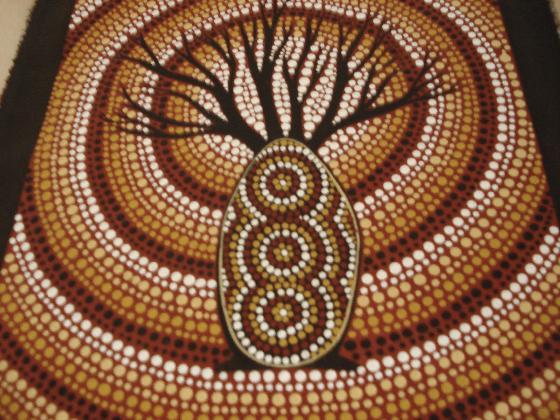
ABORIGINE ART IS SOME OF THE OLDEST ART ON EARTH

28,000 Years ago an Aborigine Artist drew and painted on a rock!


From google image for educational purposed only

A recent discovery in Australia had dated the one of the earliest painted art on Earth.  The Star News reported that archeologist discovered this detailed painted rock in a remote region of Austraila. Following is a section of the article from the Star, to read more, click on the highlighted blue text below.
"

THIS intricate rock painting is thought to be one of the oldest in the world after it was dated to 28,000 years ago.

The charcoal piece, discovered at a remote site in Australia, is some of the earliest evidence of human painting.
The Aboriginal artwork was found last June in Arnhem Land in the country's Northern Territory but was dated only recently by experts from New Zealand’s University of Waikato radiocarbon laboratory.z"


Read more: http://www.thesun.co.uk/sol/homepage/news/4379804/Aborigine-art-among-oldest-ever-found.html#ixzz2Syv0KQDX


An interesting story about Aborigine art comes from a trip I took to Sidney in the 1970's.  I was a young art teacher working on Subic Bay Naval Base in the Philippines and went with a group of teachers on our spring break to Sidney for a vacation. While I was there I got very interested in Aborigine art and bought several bark paintings.  I kept them in my art room for example when teaching art to young children.  I would pass the paintings around and let the children feel and hold the bark paintings. We did large units on Aborigine art and the children did their own Aboriginal art.  It was not until recently I discovered these old works were worth a great deal of money and here I had  been just letting them be handled by kids and not so gently I might add...if you know kindergarten and 1st graders..you know what I mean. Wow, what a surprise for me.  The only sad part, is the names of the artist that were on the back fell off years ago, so I can't identify them anymore.  They are quite wonderful though. The other sidelight is I came home from that trip with pneumonia and was delirious when I got off the plane! It was a memorable trip in more than one way. 

Friday, December 7, 2012

MABUHAY!

Vincente Dizon Alverez                                  Philippines                   from google image

I wanted to highlight Philippine art today as a thought send out to so many families in Mindanao who have endured a horrific typhoon where much life was lost.  Our thoughts go out to the Philippine people and their families.  As we face our own disasters here with Katrina and Sandy, we are ever reminded of the suffering of others. I lived on the island Luzon for three years living in the city of Olongapo.  I met many warm and wonderful people there.  The Philippines will always have a part of my heart.  So I say Salamat Po, thank you.  

Friday, September 21, 2012

HOW LIFE EFFECTS ART
A PERSONAL EXPERIENCE

The Philippines 1972-75 
Journey to the Rice Terraces of Banaue 
Igorot Tribal Territory
Head hunters still active

I was a young art teacher working on Subic Bay Naval Base in the Philippines in the 1970's. I lived in the city of Olongapo off base with another teacher sharing a house on the side of a mountain.  I chose to live off base to live in the community and to get to know the Filipino people and culture better.  My friends and I were mostly in our twenties and some older, but all curious and open to learning about the world and other cultures.  I say that, because many Americans that were in the military, chose to stay on base as if it were an Island isolated from the world they lived in..never leaving, never interacting with the people or country they resided in.  Our group traveled widely and experienced all with open arms and with great delight.  
Halsema Highway to Banaue  google image
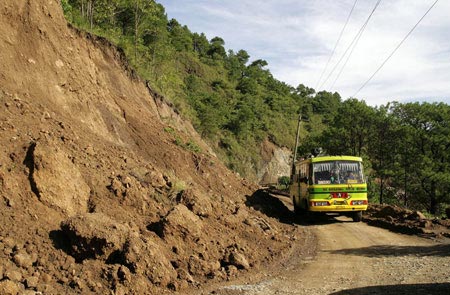
Bus on narrow dirt Halsema highway google image
On this one trip we went to Baguio in Northern Luzon.  There was an American R&R for the military personnel, but it was also a beautiful cool mountain city with fantastic open markets with fresh vegetables and exquisite crafts.  From there we booked a trip to the rice terraces of Banaue.  We were told the trip was arduous and long on the Halsema road ( Halsema must be one of the worst highways in the world. I must say that I agree with him. Quote: “There are many accidents and overturned buses on a yearly basis. Often there are sheer drop offs of over 1000 feet without a guard rail. During the rainy season it is nearly impassable.”) and that we would be driving through head hunting territories ( warning, graphic picture in link) that were still active....but we were told it was our good luck it was not the right time of year to take heads! As we drove through the country side the mountain roads twisted more and the elevation got higher and higher.  At one point the road was so narrow it only allowed for one way traffic.  We were stopped at the base of the mountain in a small village where they radioed ahead to stop the cars at the top.  It took over an hour of waiting for the last automobiles to come through. While we were waiting I decided to take some photo's of the people and village from the car (as we asked not to get out).  It was not a popular decision, as the locals decided the camera would steal their souls.  The people began throwing rocks at car. In the nick of time the gates lifted and we were off.  The road was narrow, dirt and hugged the mountain. At one point huge rocks blocked our path and we all got out to help our driver push the bolder's over the edge. Later we encounter a bus full of nuns that were on their way down the mountain that had gotten stuck..they blocked out path and there was no getting around.  So the driver of our car got out and begin to try to help...with lots of effort from many people standing precariously near the edge on the steep slippery cliff of the mountain...the bus was unstuck and the Nuns were on their way again.


Banaue Rice Terraces                                                  google image

We finally arrived in the very remote village of Banaue. The first day was market day, where the most awesome of weavings were sold.  My goal as a twenty year old American had been to go to the most remote areas untouched by western civilization and see indigenous cultures.  I was so pleased, I thought I had achieved that in this head hunter village as I was being stared at by a barefoot
Ifugao man with the barest of covering, and wearing his human vertebrate necklace! And 


Ifugao Man  google image

then I looked up, and on the side of the mountain was the largest Coke sign I had ever seen!  I was stunned...there was no other signs anywhere, no advertising, but here was this red huge Madison Avenue affront.  So began the first conceptual art piece I ever did....Pervasiveness Of Culture.  It was a montage of Coke ads and photo's of the Igorot peoples.

Ifugao Weavers                 google
There was much discussion during the time I lived in the Philippines about the influence of Western culture that was obliterating the culture and belief system of Filipino's...and not for the good.  As there has been world wide also, and the discussion continues.  When does one culture have the right to dominate others?  

Wednesday, September 19, 2012

Magandang Umaga Philippines!  

google image
Paco Garospe(click) is known as the Picasso of the Philippines. 

 I lived in the Philippines as a young art teacher and had some wonderful experiences there.  I met artists and took art classes as well.  It was a wonderful time in my life.  I learned many things during that time, about myself, my country and the world.  The Filipino people were kind and patient mentors of a young American abroad.  I was greeted with generosity and warmth wherever I traveled.  I had a little brown Dodge Dart that I drove to Manila and Baguio and back.  I rode through dirt roads with pot holes in a cane field for miles to take a short cut to Manila with the warm island breeze drifting in my car windows.  I need to have a t-shirt that says I drove in Manila and survived!  I watched local craftsmen carve statues in a variety of woods. I watched tiny woman, as strong as a man, throw huge pots of a wheel.  I drew and painted and took photographs, but mainly I experienced life.  I learned to love lumpia and pork adobo. I rode jeepenys through town and shopped in the open markets.  I saw rice fields with slow moving water buffalo and small children riding on their backs. 

google image
 I saw families so tender and patient with children it touched my heart.  I snorkeled the crystal clear waters and floated above a universe of the most beautiful sea life one can imagine.   I rode through head hunter territory to the terraced mountains of Banaue. And it was there I had an experience that would later become a major piece of art for me.   
So to the Filipino people, I say salmat po!  Thank you!

Saturday, December 10, 2011

Making the World a Better Place through Art


I would love to have feedback from all of you in your area of the world as to the ways we can use art to make the world a better place. It can be for an individual, a group of people, for the globe..it can be for a greener world, or a more peaceful world, or a world where we bypass politics and reach out to each other. In living in many other countries for extended lengths of time, the one thing I learned well is people are wonderful everywhere, it is the governments that divide us and make us feel distance from each other. I have learned so much from other cultures and learned quickly that my culture is not the center of the world, but that I am a citizen of a larger world and we are all a member of the human race. We share a planet, we breathe the same air, and depend on the same resources. We all love, feel pain and sadness, we all hurt, and we all struggle and suffer with bad times and obstacles. We are more alike than we are different. I truly believe art can make a difference as a flux for people to work together in a peaceful hopeful way, learning and sharing. When I lived in the Philippines I learned how close family relationships can be, I learned how loved a child can be by all the members of a family, I learned that patience and a soft voice can go a long way. I learned what being a host was, when a guest was present. I also learned the loudest people in any room were Americans.
When I lived in Turkey I learned what hospitality was truly about. I learned loyalty to friendship were paramount. I learned religions different from my own were not threatening, but interesting. I learned about the value of tradition. I have learned the value of traditional functional arts.
I have learned from where ever I have traveled and lived. It is the university of the world, if you are open to learn. I learned no matter how small the country, how rural the area, there were things that were superior to civilized countries.
Here is a site I recently saw on line that supports local artists in rural areas and supports indigenous cultures. It is called Better World Arts. Another positive idea that is helping end gang graffiti and promote a more peaceful environment is the Philadelphia Mural Project. To see all the murals takes three different tours and several days. The key to the success of the program was community involvement.

If you have difficulty leaving comments on the site, just e-mail me directly with your ideas and suggestions. My e-mail address is rabbits5@aol.com
Please join me in this quest, together we can do a lot! Lets reach out and make the world a better place through the arts!
Related Posts Plugin for WordPress, Blogger...