Showing posts with label Pop Art. Show all posts

Sunday, December 1, 2013

THE POWER OF THE IMAGINATION

Art of the Ordinary Continued…

"THE COCKTAIL PARTY" BY SANDY SKOGLUND

from google image, for the sole purpose of education

Cheeto's, jellybeans and more: there is nothing that escapes the imagination of Sandy Skoglund for her wonderful, imaginary installations!  And once again we look at something as ordinary as snack food that becomes art.  What is it in Skoglund's brain that connected cheeto's to art?  Was she just sitting there one afternoon on her couch watching a movie eating cheeto's and thought,"hmmmm cocktail party=cheeto's=art installation?" 


I was once at an state art teachers conference in which Sandy Skoglund was the guest speaker.  I was absolutely mesmerized with her imagination and vision of creativity.  Her art is humorous, yet serious at the same time and I guarantee you will never see cheeto's and jellybeans the same way again. 

Sandy Skoglund    Jelly Bean Children                                      from google image, for education only
 It is perhaps that Sandy takes things from our normal world and recreates scenes that are recognizable in our lives and culture.  She enables us to have a different vision and that is what an artist does best in my thinking; an artist can help you see things or think of things in way you might never conceive.
For some of you if art is not realistic, or pretty then it is not art or not something you can feel comfortable with, but even artist who paint portraits or scenery realistically  can make us feel or see something in a different way.  Think of the Impressionists, the German Expressionists, or PoP Art.  You can recognize the scenes or things that are represented in the work, but the different styles have different messages, emotions and purposes they convey. And then there was the painter who did portraits of people using vegetables and fruits! Archimboldo's people were definitely weird looking, but recognizable also and definitely from ordinary things in the artist everyday life.  
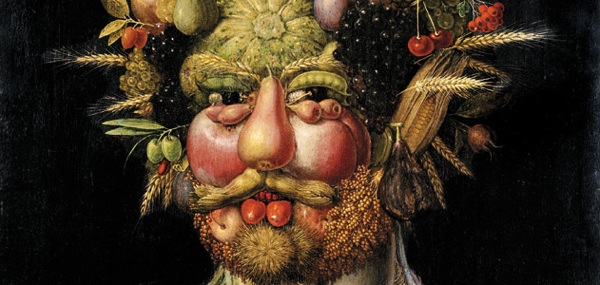

Archimboldo                from google image for education only

Wednesday, March 20, 2013

OK YOU FASHIONISTAS IT IS TIME TO POP ART IT!!!

AS FAST AS YOU CAN YOU SAY LITCHENSTEIN YOU TOO CAN BE A POP ART FASHION STAR!


Isn't this great?!  There are so many ways to bring art alive and to have a sense of humor about it. I ran into this on you tube and just loved it.  The next costume party I go to this is it, I can hardly wait!!!  So it must makes you wonder what else one could do?  Picasso, Mona Lisa, Dali....hmmm the list could be endless. 
So have fun, do you own design, send me ideas or you pictures and we will post them!!!

Sunday, December 30, 2012

WHAT IS ART?

Cave Paintings of Lascaux     from google


This is worthy of a discussion and has been for as long as man first picked up a stick of charcoal to draw.  From the days of the cave man when drawings of bison and deer were depicted on the walls of caves man has been involved in the act of making things and expression.  The caves of Lascaux, France did not show stiff nor ultra realistic drawing, but drawings that show movement and a knowledge of oneness with nature.
 I am sure there are people today, if these drawings were taken out of context, would call them too fluid, not realistic enough, a limited color pallet and so on. Every period of art, every movement of art has been met with controversy of some kind. From ancient Egypt to Italy, to France, to Asia and the Middle East, culture upon culture, age upon age, the needs and styles of art have changed.


Egyptian side view with frontal eye                     google image

I think another part of this discussion is why does man need to draw or create? Why did the cave man feel the need to pick up a piece of charcoal, mix earth and chalk to recreate their hunts?  One could have just told stories or sung songs.  In some cultures drawings become real things that have a life of their own.  Each culture has a need to create, to reflect upon itself and as our technology has changed so has our art.


The Mona Lisa by Leonardo Da Vinci 
from google image

Artist once were chained to their studios because paints in a tube were yet to come and easels were not portable.  Colors had to be made and ground out, brushes were licked to a point by assistants, and there were periods where anything could become a base for a color, such a mold for green, or mollusks for an intense purple.  Whole villages died due to lead poisoning from the lead in the artists paints and assistants lips were distorted from pointing brushes loaded with lead.
The Greeks came up with perfect proportion, the ideal.  Leonardo dissected bodies to learn the true structure of a human to the risk of his own life.  Math came into play as Renaissance artists wanted a truer since of perspective.
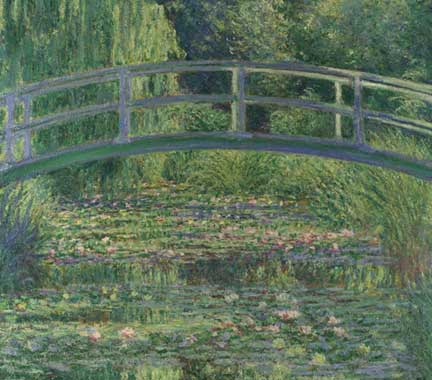
Once the camera was invented there was not the need to record images for the sole sake of representation.  Now artists could take more leeway in interpretation, emotions, and experimentation. The art movement in Paris led us away from stiff dark colors, to emotion, light and movement. Impressionism moves forward with Monet, Renior, Van Gogh, and Degas.  How does the light seem, what is the emotional play through the artist to the subject at hand.  How can I show just the quick look of movement and light?


Monet's Gardens at Giverny, France
from google image

Then came harder times with violence, poverty and war.


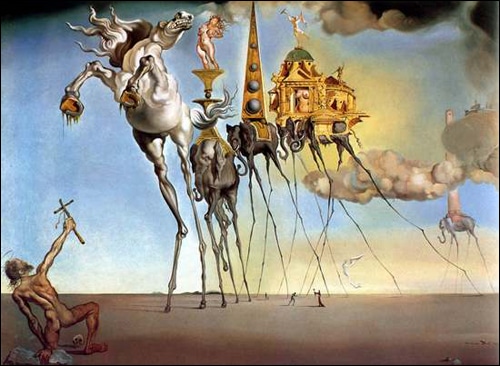
Salvador Dali                                                     Surrealistfrom google image


Dadaism was a reflection of a senseless time at the end of WWI that people questioned to the core of their beings the desperation of their times. Science and art often go hand in hand.  As Freud is questioning the meaning of our dreams and symbolism then surfaces art that presents symbols and the nature of the mind. Surrealism was not long to follow, then we begin to question again what perspective truly is as Picasso shows us a multi -dimensional person with the nose to the side and the eye looking forward. 

Picasso                  Cubism   google image

Cubism is born and we look at many things, not just people from a different view. We know objects are three dimensional, so what is realistic and not?  
And now we are at a time when Modern art often has a disconnect with people who view it.  So we must ask ourselves why is that?  What is it about our age and our culture that has produced art that seems is harder for people to understand?  As we are more complicated as a society, as we are more advanced as a civilization, and as our technology rapidly changes...our art reflects us as a people.  Art reflects the confusion of the time, the alienation people feel from a modern world that often leaves them in their wake of rapid change, and changing value systems.  I have oft heard it said that artists are the shaman of their times....we reflect our world back to our culture.  Modern art makes us think, asks us questions that are not simple, and rarely is a representation of the sake of representation.  


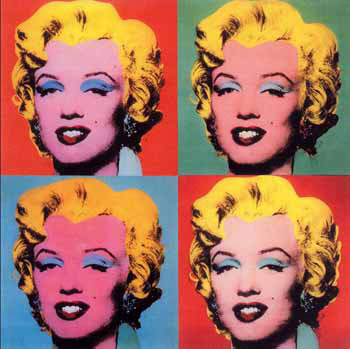
Andy Warhol                            Pop Artist


 The need is not there because we have cameras, computers, and the ever expansive flow of data.  As technology expands even further and more things become possible that seem beyond our imagination now...what will artists do with it?  They will create, that is what they do.  They will interpret our world for us when it gets to complicated to comprehend.  They will make us think deeply and help us to see things in a way we never would have.
 Should it always be pretty, should it always be easy, should it always be representational-I would put to you it should not be.  It would be to our detriment if it was.


Robert Rauschenburg      from google image


  Should it be ugly and hard to understand...yes, sometimes for that is how we are as a world and as people.  We would dishonor art to take away artists freedom to think and create, we would diminish art if we demanded artist only copy nature or people realistically and more so we would limit our growth as people and a civilization if we do not encourage our artists to experiment and grow and to envision what can be.
 If Gaudi had never envisioned architecture as if it were fluid and melting instead of angular, if Da Vinci had never dissected the first body, if Buckminister Fuller had never built the geodesic dome, if the cantilevered arch had never been invented, if Van Gogh had never painted starry night, and Michelangelo had never lay on a pallet painting the ceiling of the Sistine Chapel, if Picasso had never painted Guernica protesting the massacre of the Basque in Spain, and Pop art had never pointed out the mass commercialism of our times, the Eiffle tower was never built, and Frank Lloyd Wright had never picked up building blocks....our world would be poorer for it. Look about where ever you are, right now.  Now imagine if there were no art..the walls bare, the architecture non existent, the furniture no imagined, the halls of all the buildings blank..so signs, no nothing, just bare..that is a world with out art.
 I am not an art historian, but I have had many art history courses.  I am open to discussion and correction.  I think we should be open to a fascinating discourse on the arts.  Please feel free to add to the discussion.

Thursday, November 15, 2012

James Rosenquist and the Grand Painting

James Rosequist and the F -111
86 foot long painting!

                                            from you tube


If you had any doubt why James Rosenquist (click)would need a three football field long studio, then this will put them to rest. Few galleries can ever exhibit this piece, so count yourself lucky if you have ever seen it in person.  It is quite remarkable.  His studio in Aripeka, Florida(click)gives him the bright clear light he desires for his painting.  He goes back and forth between New York and Florida.  Locally he has been a tremendous force and supporter of the arts.

Wednesday, August 29, 2012


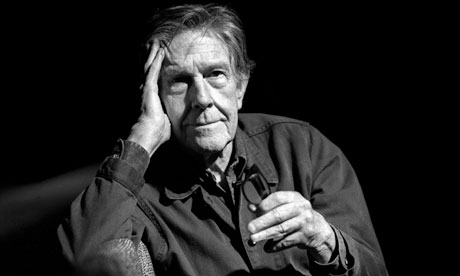
‘I can’t understand why people are frightened of new ideas. I’m frightened of the old ones.’
— John Cage


John Cage was a creative, innovative master of music. He was one of the original Black Mountain School of Arts in the Blue Ridge.  Black Mountain School was in the 1940-1950's was filled with artists who would later become famous on the national and international scene. 

Founded in 1933 by John Andrew RiceTheodore Dreier, and other former faculty members of Rollins College, Black Mountain was experimental by nature and committed to an interdisciplinary approach, attracting a faculty that included many of America's leading visual artists, composers, poets, and designers, like Buckminster Fuller, who invented the geodesic dome.

Operating in a relatively isolated rural location with little budget, Black Mountain College inculcated an informal and collaborative spirit and over its lifetime attracted a venerable roster of instructors. Some of the innovations, relationships, and unexpected connections formed at Black Mountain would prove to have a lasting influence on the postwar American art scene, high culture, and eventually pop culture.[citation needed] Buckminster Fuller met student Kenneth Snelson at Black Mountain, and the result was the first geodesic dome(improvised out of slats in the school's back yard); Merce Cunningham formed his dance company; and John Cage staged his firsthappening[3] (the term itself is traceable to Cage's student Allan Kaprow, who applied it later to such events).
Not a haphazardly conceived venture, Black Mountain College was a consciously directed liberal arts school that grew out of theprogressive education movement.  Source, Wikipedia, Black Mountain School of Arts

I went to a University that was at the beginning of its creation.  University of South Florida was  patterned after UCLA to be innovative and progressive.  Many professors and speakers are drawn to a new university and mine was no exception.  I had the wonderful privilege to have many innovative professors and hear exceptional national speakers.  Two I will always remember were Joseph Albers and Carl Sandburg.  Both were remarkable men that influenced me the rest of my life.  Joseph Albers was one of the founders and administrators of Black Mountain School of Arts.   Another of my favorite artist that taught at Black Mountain was Robert Rauschenberg.  

Monday, April 2, 2012

Guess Who Came to Dinner! Dinner with friends and artist James Michaels


Skippy by James Michaels from the Tom & Mary James, Raymond James Financial Collection/google image 
I am not sure what your idea of heaven or nirvana is, but for me it is to be among artists and creative compassionate people.  Last night was an evening that was almost magical.  We attended a friends birthday celebration in their wonderful home that was filled with art.  Simpatico is a word that the Spanish use for when something or someone is so special it is hard to explain.  The evening was like that...filled with talk of creativity, art and ideas.  Was every one an artist?  No, some were teachers of special education, some worked with troubled teenagers, some were hospice councilors worthing with death and dying and some were artists and teachers of the arts.  There are just sometimes when something feels so right...like when an instrument hits a perfect note, or a gorgeous sunset....it is just awe inspiring.  I felt so fortunate to be among such special people, it is one of the things being in the arts brings and for that I am forever thankful.  The evening just flowed with wonderful food, wine and fascinating conversation. There was humor, serious discussions of the world events, of what one was painting or creating, sadness of aging parents and their care, and joy for sharing a friends special day.
 I want to mention a couple of people that were there you may enjoy getting to know.  One is painter from this area whose reputation is growing nationally. It was such a nice surprise, I had not an idea he and his wife were going to be there.
attending!


  His name is James Michaels(click for link). 
 His paintings are masterful and engaging.  I think you will find them very interesting and skillfully painted.  My friends birthday present was one of Michaels' paintings!
I think this is an artist you want to get to know.  His work is fresh, edgy, a bit pop art, but more.  His language is of modern culture and image.  I just love his work.  I had not seen Skippy before doing this article and I think it is my favorite...but each time I see a new painting I think that one is my favorite.  My friends have enough of James work to have their own gallery and Michael's has a large clientele that collect his work religiously.  I think they all want to buy his work before he is discovered and they can no longer afford it!!!
James and his wife Julia are wonderful people. They are quite humble people that have great passion for art and the creative genius James has.  Over the years Michaels work has evolved and I think in very interesting ways.  I loved his early work and it still appeals to me a great deal, but his new style pops off the canvas and grabs your attention.
Take time to get to know this wonderful artist!


13 Men Raymond James Collection

Thursday, March 29, 2012

5 Facts about James Rosenquist


This is an article by kris Kerzman of James Rosenquist.  There  has been so much interest on the blogs I have written on Rosenquist that I thought you would all like more information about his life and career.  I hope you enjoy the article

Five Facts About James Rosenquist by Kris Kerzman
1. He’s from North Dakota. Rosenquist was born in Grand Forks in 1933, moving around the region frequently in his youth and spending a fair amount of time at his grandfather’s farm near Mekinock, N.D. Rosenquist has noted that the landscape he was a part of became an inspiration for his perspective on the world – the wide open prairie would often be home to large stretches of disjointed imagery. After settling in Minneapolis, he graduated high school there and attended the University of Minnesota.
2. He began his career painting billboards. Rosenquist worked for General Outdoor Advertising in Minneapolis following his graduation from college. In the early 1950s, billboards were all painted by hand, and he became well-trained in the process. Following his move to New York City in 1955, Rosenquist enrolled in the Art Students League and within a few years began professionally painting billboards once again. This experience proved to be a critical component of his work. He learned how to scale small images into large ones and to work the materials necessary for creating large murals.
3. He is considered a founder of the Pop Art movement. While in New York, Rosenquist began to paint large murals that incorporated the effects he had learned painting billboards and the techniques of commercial advertising. His paintings would juxtapose seemingly unrelated fragments into works that defy easy explanation but do pull in the viewer’s curiosity – chosen for their form and color, many of his subjects are all instantly recognizable (visit Rosenquist’s website for examples of his artwork.)
In Painting Below Zero, Rosenquist says that he “never cared for” the term Pop Art, explaining that the term “pop” lent itself to something unimportant or impermanent. Still, he became grouped with other artists from that era (Andy Warhol and Roy Liechtenstein, for example) who were working with a similar set of tools. They all utilized popular American images in an ironic sense in their work and provided commentaries on the emergence of 1950s-era consumer culture. Rosenquist said that they should have been known as “antipop” artists. His breakthrough piece,F-111, offered a commentary on modern militarism through a mural that wrapped around the walls of the Castelli Gallery in New York. This was the beginning of a long period of critical success for his art.
4. He has received numerous accolades for his work which resides in collections across the world. Rosenquist has received a number of honorary doctorates and was appointed by Jimmy Carter to serve on the National Council on the Arts from 1978-1983. In 1987, he was named to the American Academy and Institute of Arts and Letters. His work has been shown throughout the world and has been collected by a number of museums, including the Museum of Modern Art, The Guggenheim, The National Gallery of Art, and many others. A retrospective of his work was shown by the Guggenheim in 2003.
5. He has maintained a successful career spanning five decades and continuing to this day. While tastes in visual art have changed, Rosenquist remains a relevant and in-demand painter. He continues to fulfill requests for commissions and continues to push forward with his art. An exhibition of new work, Time Blades, was shown at the Aquavella Galleries in 2007.
In April, 2009, a major fire destroyed Rosenquist’s home and studio in Aripeka, Fla., taking all of his work with it, including a first version of The North Dakota Mural. He immediately rebuilt his home and studio and began working again, completing commissions and continuing to inspire with his work even at age 77.
If you enjoyed the article please let Kris Kerzman know.  This was a wonderful job of quick efficient facts about James Rosenquist.

I did have the opportunity to meet and speak with him once at the Tampa Museum of art. He is a positive, engaging and generous man.  He gives back to Tampa and the communities that are near his Aripeka studio.  

Saturday, December 3, 2011

Pop Art


Pop Art

Popular Art

The definition below is from Wikapedia. I think it is interesting that icons like Marilyn Monroe and Elvis keep being rediscovered from one generation to the next. If we step back from the world we live in daily and view it from afar or even with a different eye as Warhol did and many of the Pop Artist it helps us to understand culture in a way we might not. I think that is one of the functions of the artist. Jung called it "artist as shaman". The artist can interpret or translate the world we live in with an almost spiritual intellectual view.
There are times when the average person does not understand what an artist, or art movement is conveying. At times it seems not to make sense and with that frustration people will reject or ridicule the art or artist. But as with Warhol and the Pop artists we begin to see the what the influence of mass culture and commercialization had on us as individuals and as a society.

"Pop art is an art movement that emerged in the mid 1950s in Britain and in the late 1950s in the United States.[1] Pop art challenged tradition by asserting that an artist's use of the mass-produced visual commodities of popular culture is contiguous with the perspective of fine art. Pop removes the material from its context and isolates the object, or combines it with other objects, for contemplation.[1][2] The concept of pop art refers not as much to the art itself as to the attitudes that led to it.[2]

Pop art employs aspects of mass culture, such as advertising, comic books and mundane cultural objects. It is widely interpreted as a reaction to the then-dominant ideas of abstract expressionism, as well as an expansion upon them.[3] And due to its utilization offound objects and images it is similar to Dada. Pop art is aimed to employ images of popular as opposed to elitist culture in art, emphasizing the banal or kitschy elements of any given culture, most often through the use of irony.[2] It is also associated with the artists' use of mechanical means of reproduction or rendering techniques.

Much of pop art is considered incongruent, as the conceptual practices that are often used make it difficult for some to readily comprehend. Pop art and minimalism are considered to be art movements that precede postmodern art, or are some of the earliest examples of Postmodern Art themselves.[4]

Pop art often takes as its imagery that which is currently in use in advertising.[5] Product labeling and logos figure prominently in the imagery chosen by pop artists, like in the Campbell's Soup Cans labels, by Andy Warhol. Even the labeling on the shipping carton containing retail items has been used as subject matter in pop art, for example in Warhol's Campbell's Tomato Juice Box 1964, (pictured below), or his Brillo Soap Box sculptures."

The statement below gives us insight into what Warhol was thinking and his meaning in creating Marilyn.
It makes one think what will be the next art movement and what will it tell us about our own mass culture now. Who will be the shaman artist that reveals that to us? It is exciting to me to ponder.

"Warhol is a pop artist, meaning he takes images from popular culture, commercial products and advertisements and recontextualizes them within the framework of the art world. By using a familiar image like Marilyn Monroe, he flattens the image of her to show our shallow understand of her. She has become an icon of pop culture, and no longer a person with depth and character. Her iconographic portrait is a symbol for beauty and fame, and no longer for the person she is/was." W.C. Chatton
Related Posts Plugin for WordPress, Blogger...