Showing posts with label michelangelo. Show all posts

Monday, December 9, 2013

MICHELANGELO DID WHAT?!

ART FACTS OF INTEREST

I read recently that Michelangelo began his painting Last Judgment in the left hand upper corner and the next four years progressed through 250 nudes.  He used a process called a comp, a drawing on paper, pounced and then re-drawn in to place.  In the tradition of the time, the faces were painted first and less skilled elements were handed down to assistants.
Cezanne, however, painted all at one time, a system that was observed in his unfinished works.  This over all process was used by many of the Impressionists. (source of information Painters Keys Newsletter. ) 


Michelangelo's Last Judgment          from in google image for education only


Tuesday, September 24, 2013

QUOTE BY MICHELANGELO

I am still learning.
Michelangelo 87 years old

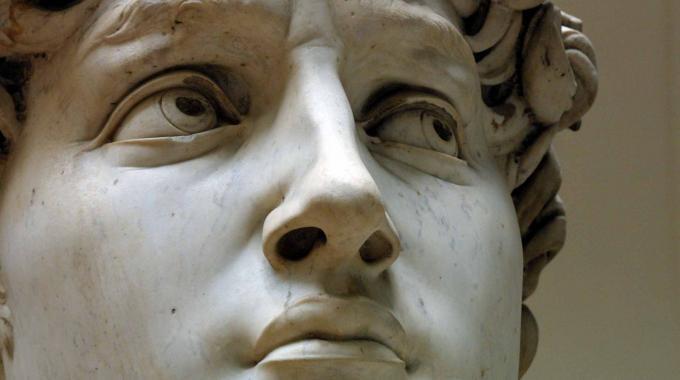
                                                                                                                                               David
 from google image, only for educational purposes

Sunday, June 30, 2013

The Doubting

If you read Julia Cameron's books on artists and writers, The Artists Way or the book the War of Art by.....Then you will read about the artists block and the many ways artists block and sabotage their own creativity and art projects.  It is inherent in the process.  "I will never make the deadline I might as well quit", "I shouldn't have put that there and now it is to late", "this is no good, no one will like it", "this is no good, it is the crappiest piece of art I have ever done", "why did I ever think I could do art", "maybe everyone will find out I am really no good and the last award was just a fluke", .......it goes on and on-a thousand negative thoughts that are meant to sabotage your efforts all manufactured by your mind.  Then there are the delaying tactics, I need to clean the house(when you know you don't), I need to wash my hair, I need to take go to the store, I need to watch paint dry(I threw that in for the ridiculousness of it) and so on.  Then we often enable friends and family members to sabotage us by asking leading questions, "don't you think this work is a piece of crap?", "this is not the best work I have ever done", or when we choose a family member or friend who we know doesn't appreciate our style of work and then ask their opinion, in that way we subtly invite negative remarks to sabotage our own feelings of doubt to re-enforce our own need to block ourselves.  
This is a dangerous phase because even the best of artists and the most experienced of creative people will fall pray to its temptations.  If you think Leonardo Da Vinci or Michelangelo or Manet or Sargent did not have these devils you would be wrong, all you would need do is to read their biographies and you would find the same struggle all artists have gone through over time.  Van Gogh is one of the most dramatic of examples, his mental illness magnified his struggles and doubts.  But the point here is it is a step in the artist process as well as any other, and one we must all weather through to get to the other end of success in our work.  
Last night my doubts began and my mind filled with negative thoughts about my piece.  Much the same as I wrote above...this is a crappy piece of work not worthy of my effort, they are going to think it is ridiculous and look at it and know right away I am a failure, the cows are the wrong color, I should have glued the evil eye charm down I should have tied it, shit I got glue on the plastic now the piece is ruined, the top works, but the bottom belongs to another piece, I am not conveying the theme Home,  I started in one direction and ended up in another maybe that is too confusing, I can't enter this and show it hundreds of people, and on and on and on.  
Then at some point the doubts quiet down if you stare them down and restore confidence in yourself.  Ah, if I put this here or it really does look good, that flows better than I was thinking, the blue cows with added lettering in gold work, I have put in many elements, but it is a conceptual piece and I want people to think, and in the end I realize I must do the work for myself and  create for myself..how others perceive it is their own business.  Andy Warhol said it best, just do art and let others figure it out, but the art must get done. 
I am a Surrealist at heart, it took me half of my art lifetime to understand that, it is an intellectual, conceptual way I work.  I put many subconscious triggers throughout ever work, each to be interpreted in a variety of ways by the person viewing them.  So I know from the outset my work will be viewed differently by the experiences a person has in their lives when they view my work.  For example if I put a snake skin in a work, some people may thing evil or danger or the shedding means getting rid of the old to be born anew, new life or many other meanings.  So much depends on our experiences, our education, our culture, our age, our childhoods, and so many other things.  The next time you view a piece of art, whether conceptual or not....there is always an intent the artist is trying to convey to you, even when you think they are not, take time with the work, let it seep in to your senses, and then open your mind to all the images and possibilities that come.  That is what the artists, the creator would want. 
And for the artist who are experiencing the doubting phase I say weather through, it is only one of the steps, but it is necessary to go throughout the tunnel to get to the light.

Monday, June 11, 2012

Artist/ Translator of the Human Condition

Artists incorporate the human feelings into their art work. 


 Whether it is joy, sorrow, sadness, horror or our own inhumanity towards each other, the artist is a sensitive who takes in the myriad of feelings, images, sounds and sensations that have no words to explain them.  Then we interpret them into paintings, sculpture, poems, songs and plays.  In this way we help explain the human condition so others can make sense of their world and emotions.  There is great beauty in this world, there is great sadness, and there is inexplicable horror and violence. It is the stuff life is made of.   It is what took Picasso into his Blue Period(click) and why he created the masterpiece Guernica. 


Sadness, Anguish, Grief


Loss, Death, Pain

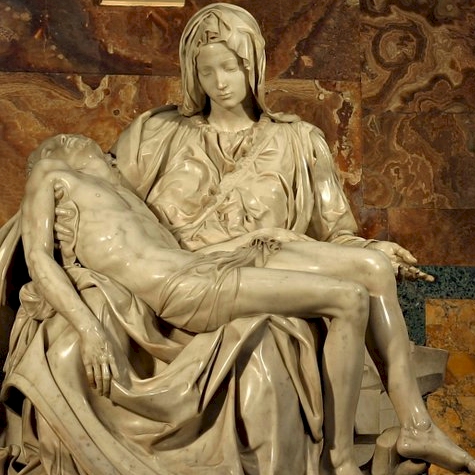
Michelangelo's Pieta from google image
Pain, Horror, Madness


Munch's  The Scream from google image
 Michelangelo's Pieta captures a tender sadness of a Mother's loss of her son, Munch's Scream incapsulates the absolute feeling of horror, pain and terror, and Hiroshige's Wave shows the power of nature over man.


Violence/Death/Mans Inhumanity to Man


Detail from Picasso's Guernica  from google image


I thought we would touch on these themes and look at how artists capture these themes for us.


These past two weeks I have been in New Orleans, as you might have noted in my previous posts.  I am here to help my partner with her Father who is dying of  cancer that moved into the bones.  He is in the last stages of cancer and the decline has been rather rapid.  It is so difficult to see someone you love so ill and watch their body begin its final transition.  Seeing  the emotions of friends and family grapple with their emotions and watching him cope with pain and  sadness is so wrenching.  It brought to mind master art work that best depict such sadness and pain.  
Also in the time I have been here in New Orleans there has been an unprecedented rash of senseless violence and murders in a city mired in poverty and recovery from the disaster of Hurricane Katrina.  Again as I was horrified by the senselessness of the murder of the young and impoverished.  One such murder was that of a 5 year old girl at a birthday party and a 33 year old Mother of 3 driving three blocks away.  Boys playing men shooting at each other over rivalries in broad day light.  A city in turmoil with senseless murders and violence. 
It is not only New Orleans, but much of the United States and other countries are resorting to solving problems with guns and force. 
The world seems more violent these days and violence more senseless.  More Mothers grieve the loss of their children than should.  Boys that can never become men, and little girls that will never see their first dance.  How do we cope with such loss, sadness, pain, and terror.  Lets take a closer look at artists who have done so.

Friday, May 18, 2012

How We See, Why We See What We Think We See!

Ancient Greek Statue  google image
Ways of Seeing 
by John Berger

I am continuing to re-read Berger's book after a long absence. It was one of the reccommended text when I was taking graduate level art history.  It has been many years, but I find it as fascinating as before.  It is not an easy read, but full of deep and thoughtful statements about our relationship to visual images and what we accept as real in our world. What emerges is that how we see is through a set of filters of our own making.  I thought I would share a few of his ideas with you and then discuss the thoughts he presents.  His writing is bit dry so hang in with us as we decipher these diamonds in the rough.

"Images were first made to conjure up the appearances of something that was absent.  Gradually it became evident that an image could outlast what it represented; it showed how somebody or something had once looked and thus by implication how the subject had once been seen by other people.  Later the specific vision of the image-maker became part of the record.  An image became a record of how x had seen y.  This was the result of an increasing consciousness of individuality." Berger

google image        Cave Paintings of Lascaux France


Egyptian Image of a body  Google

So let see if we can say this is simpler terms.  Cave man painted pictures of animals he hunted on the walls of his den with charcoal and chalk and red clay.  He drew an image of something that was absent..he had killed and was no longer there or the herds had migrated for the season.  Later other cavemen and later peoples see the images the first cave peoples drew and accepted their vision of what a deer or stag looked like.  Then for centuries people drew deer in the same manner and accepted that deer looked like that image.  It became part of the record of how the original artist saw and experienced deer from his point of view.  Think of how he drew the deer and the feelings he brought forth.  He was a hunter, he drew on ground level, not from above, he drew a magnificent creature that he as a hunter would be proud to kill to supply his clan and family with food.  He drew the deer as a huntsman might and he drew with the elements he had at hand in the lighting of the cave which would have been dramatic contrasts due to the firelight.  So now we beginning to see how the image maker (artist)  draws us into his way of seeing, his view point.


Now think of Europe and how this process lasted in the arts for a long time.  Drawing before the understanding of how a person is structured was one way to think of this...artists ideal of a person is repeated and repeated with out proper proportions or skeletal or muscular accuracy...until bodies are dissected by Da Vinci and others in secret.  Then the way the image maker...Da Vinci...Michelangelo...and others portray people becomes radically different and more life like. It changes how we view and accept a person looks.  Other artists then accept that view and paint in bodies or animals in the same way.

Leonardo Da Vinci's Study of Man and Body Proportions  google


Michelangelo's Pieta         google image
Think of art as time travel, but through an image that an artist offers at a specific time the way he perceives the image at that time with the influences of the culture around him.  

As Berger puts it, " No other kind of relic or text from the past can offer such a direct testimony about the world which surround other people at other times.  It is in this respect that images are more precise and richer than literature." Berger goes on to say that in saying this he is in no way denying the expressive and creative nature of art, but it even more so allows us to experience the times and the artists experience with the visible.  


So Dr. Who didn't have it wrong, time travel is possible and gives us insight in people in another time and culture and makes their view of their world visible for us...so much so we accept it at times as real for ourselves now!  
Opinions and discussions are welcome.


Friday, February 24, 2012

Virtual Website of the Sistine Chapel


Here is a website I think you might all like that was forwarded to me by a friend and fellow artist.  It is a virtual site of the Michelangelo's Sistine Chapel.  You can visit it as if you were there and scroll around the room and ceilings.  Enjoy.  Click on the word Sistine Chapel and it will take you to the site.


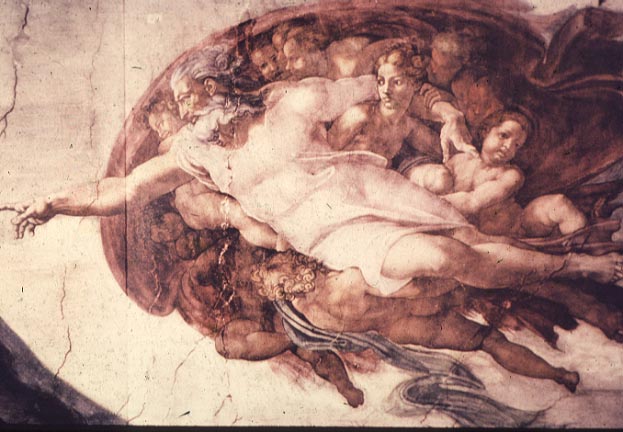
detail of ceiling 

Saturday, September 10, 2011

Design in the Everyday World

Design in our everyday world/looking closer

What excites me most, rust, old deteriorating, bleached, flaking paint, worn, used, hand touch, used and loved. Nature is a wonderful artist and no matter what man does or makes, nature touches and has her own palette. I am an archeologist at heart, but I imagine our left over objects of today as the artifacts of tomorrow. What will generations try to understand about the object that we leave behind. Often as they age and bleach out in the sun, rust in the weather, on the bare bones are left. Then we are left with the basic structure of a form or object and each piece tries to tell us a story. But also as things age they take on a life of their own, with a myriad of hues changing in the light and sun. rain makes pathways of metal giving way to rivers of rust, contrast and highlights begin as one color fades and another doesn't.

There are colors that are only born out of aging, bleaching and rusting. Look closely at the picute above with fading black turning to a blue grey or reddish orange, and yellow and grey. Look at the repetition of the rivets at the top, how the light hits the tips and draws a long shadowed line underneath. Soldiers in a line looking from above as the light cast their shadow, wharf posts in the bay, people walking along a rice patty in Viet Nam, dotted along a road as seen from a helicopter. A tenuous line of barbed wire at the bottom...delicate against an open field of reddish orange.
The pictues are from a trip I took to Mississippi to see relatives. In this town on this railroad my Grandfather one worked bringing milk from his diary to ship by rail to near by towns, his lumber from his lumber mill once was carried on these rail cars. I got out of my car and walked the line of old rail cars thinking of him, his life and times. Camera in hand snapping pictures of an earlier time and place
Rust calls to me like a beautiful sunset might to someone else. I see a painting and work of art in each piece. I would have taken it home, but unfortunately a rail car won't fit in my studio! But I will work with the images and you will see them some where in my work. I am not the artist who knows an exact plan to follow to make a piece, I am the artist that follows the lead of my intuition to the piece that forms and lends itself to me. It is a journey that I open myself to, listen and feel. I trust the process and the journey. It is a dialog with my creative spirit that has become very sacred to me.
I look at things for how they speak to me like Michelangelo looked for the stone to speak to him. When he carved he wonderful scuptures, he believed their was life in the marble, all he had to do was listen to the stone and it would tell him what it wanted to be. For me it is like, that I listen and travel into my object word...they tell me how to speak their past.

Related Posts Plugin for WordPress, Blogger...