I know what I like!
Art is in the eye of the beholder.
A child could do that!
These are all expressions one hears about art and often it is in response to art that we either don't understand or that we have a strong reaction to.
Art is constantly evolving and changing as well as peoples reaction to art. TODAY Impressionism is still one of the most popular art forms, but only a short time ago it was rejected by the art critics and public of the time. Impressionists had to hire their own space to show their work to even have it shown to the public. Before Impressionism art was less colorful and more exacting in realistic replication. It was called sloppy, junk, and blurs in the newspapers in Paris and art collectors snubbed Impressionists artists of the day. So why the strong reaction of the critics, the public and the news papers...why were people so stunned by this new art style?
If anything, what came to be called Impressionism was a natural consequence of confluent forces, social, technological, and economic, as well as aesthetic.
So we evolve from handprints on caves to Egyptian body image to Da Vinci's anatomically correct bodies, from the Greeks' perfect proportion to raised perspective to 3 dimensional. We learn more, we invent something else and things change along with peoples ideas about art. Even artists disagree about what is good art and what is not. We ask our selves the basic question of what is art. Duchamp's r.e. Mutt presented confronted us with that dilemma.
So do you have to like something you do not like, No. But you do need to ask yourself why...why do I react to this? Is it because I can 't understand it or is it another reason? To have an open mind, to be curious and to react are what artists hope for in their public.
Artists basically reflect our times, values, and questions back to us, that is their basic function...shaman of their times. It may be an in your face selection, a pleasant non threatening reflection, it may ask you to think or feel or experience, but art does ask something of us. Man will always replicate his world and environment in visual elements, as well as, reenactment as drama, and in music. We constantly seek to understand the world around us and our experiences in that world. Art is the first language of man and since time began we seek to increase our vocabulary.
by Elizabeth Gordon, Rms
Art is in the eye of the beholder.
A child could do that!
These are all expressions one hears about art and often it is in response to art that we either don't understand or that we have a strong reaction to.
Art is constantly evolving and changing as well as peoples reaction to art. TODAY Impressionism is still one of the most popular art forms, but only a short time ago it was rejected by the art critics and public of the time. Impressionists had to hire their own space to show their work to even have it shown to the public. Before Impressionism art was less colorful and more exacting in realistic replication. It was called sloppy, junk, and blurs in the newspapers in Paris and art collectors snubbed Impressionists artists of the day. So why the strong reaction of the critics, the public and the news papers...why were people so stunned by this new art style?
If anything, what came to be called Impressionism was a natural consequence of confluent forces, social, technological, and economic, as well as aesthetic.
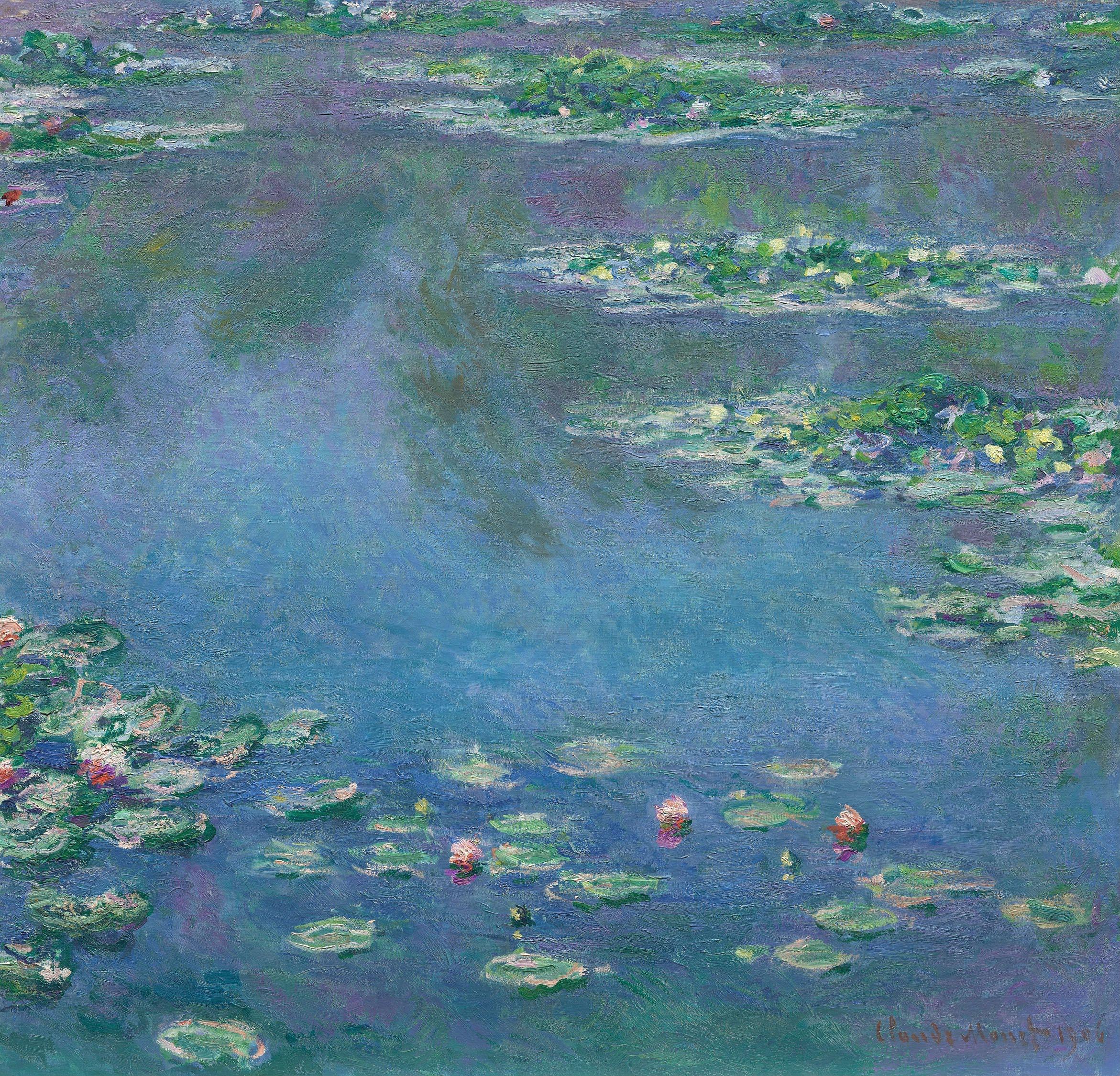 |
| Monet's Water Lilly's Impressionism from google only for the purposes of education |
"Change was inevitable. Whenever art becomes institutionalized and rigid in terms of what is and isn’t permissible, artists are going to seek new solutions to old challenges. The history of art is a continual response to changing social conventions, political events, and cultural influences, and the second half of the 19th century in Europe was especially volatile.
Among other things, technology was developing rapidly and dramatically. Industrialization had taken hold, and the steam engine was becoming practical, facilitating rail and ship travel. Most important to the history of art, photography had made enormous strides since its introduction by Niepce and Daguerre in 1839,2 and it contributed to the rise of Impressionism in a surprising way.
Among other things, technology was developing rapidly and dramatically. Industrialization had taken hold, and the steam engine was becoming practical, facilitating rail and ship travel. Most important to the history of art, photography had made enormous strides since its introduction by Niepce and Daguerre in 1839,2 and it contributed to the rise of Impressionism in a surprising way.
| For the Impressionist painters photography could tell them what something looked like, but not how one saw it. |
It’s easy to think of photography vs. painting in terms of reality vs. a transformed version of reality, but that’s deceptive. For the Impressionist painters photography could tell them what something looked like, but nothow one saw it. Early black and white photographs were a record of what was at the moment the photo was taken, but it couldn’t come close to replicating the experience of seeing." From the article by by John Crowther
 |
| Neo-Classism was the accepted art of the day from google image for education only |
So we evolve from handprints on caves to Egyptian body image to Da Vinci's anatomically correct bodies, from the Greeks' perfect proportion to raised perspective to 3 dimensional. We learn more, we invent something else and things change along with peoples ideas about art. Even artists disagree about what is good art and what is not. We ask our selves the basic question of what is art. Duchamp's r.e. Mutt presented confronted us with that dilemma.
 |
| Marcel Duchamp, Surrealist questioning " What is Art" |
So do you have to like something you do not like, No. But you do need to ask yourself why...why do I react to this? Is it because I can 't understand it or is it another reason? To have an open mind, to be curious and to react are what artists hope for in their public.
Artists basically reflect our times, values, and questions back to us, that is their basic function...shaman of their times. It may be an in your face selection, a pleasant non threatening reflection, it may ask you to think or feel or experience, but art does ask something of us. Man will always replicate his world and environment in visual elements, as well as, reenactment as drama, and in music. We constantly seek to understand the world around us and our experiences in that world. Art is the first language of man and since time began we seek to increase our vocabulary.
by Elizabeth Gordon, Rms


