Showing posts with label Subic Bay Naval Base. Show all posts

Monday, March 31, 2014

ART HELPS HEAL THE VIOLENCE WE INFLICT

Post 1 of a three part series on Art, War, and Healing

I started this thinking it would be one post, but as I delved into my thoughts and did more research I realized it would be more than one post.  Our world seems in turmoil at the moment, perhaps no more than in the past, but with instant news from all corners of the world it seems worse than ever before.  We are overwhelmed by constant news of violence, trauma, and conflict globally.  I think it is worth us looking at how we as artist portray violence, grief, turmoil, death, and our propensity as a species to have wars and kill each other. It is also worth our while to look at how art not only reflects what is happening, but also how it we need art to help to heal and make sense of our world.  Join me in this look and be feel to contribute at any time in our discussion. 


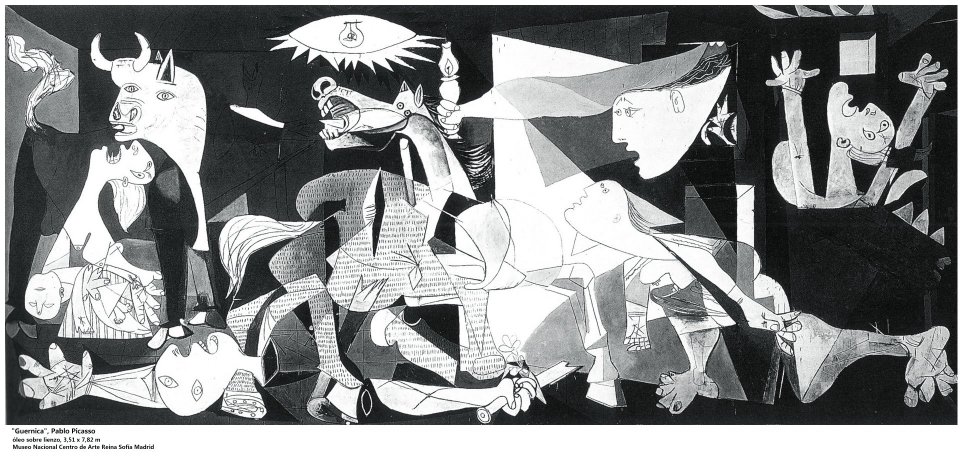
Picasso's Guernica will alway be a poignant work of art that lives in my mind. When I first studied art history in college and we would see two to three hundred slides a week, I don't think I grasp more than knowing Picasso's piece was a masterwork to be memorized.  With experience in life, the piece has become a defining seminal art work for the violence man inflicts on man…the inhumanity man brings to other men. I think it portrays not only the horror of war, but senselessness of war in which women and horses and children are killed as well.


Guernica by Pablo Picasso     from google image, only for education
By photo journalist Eddie Adams from google image for education only

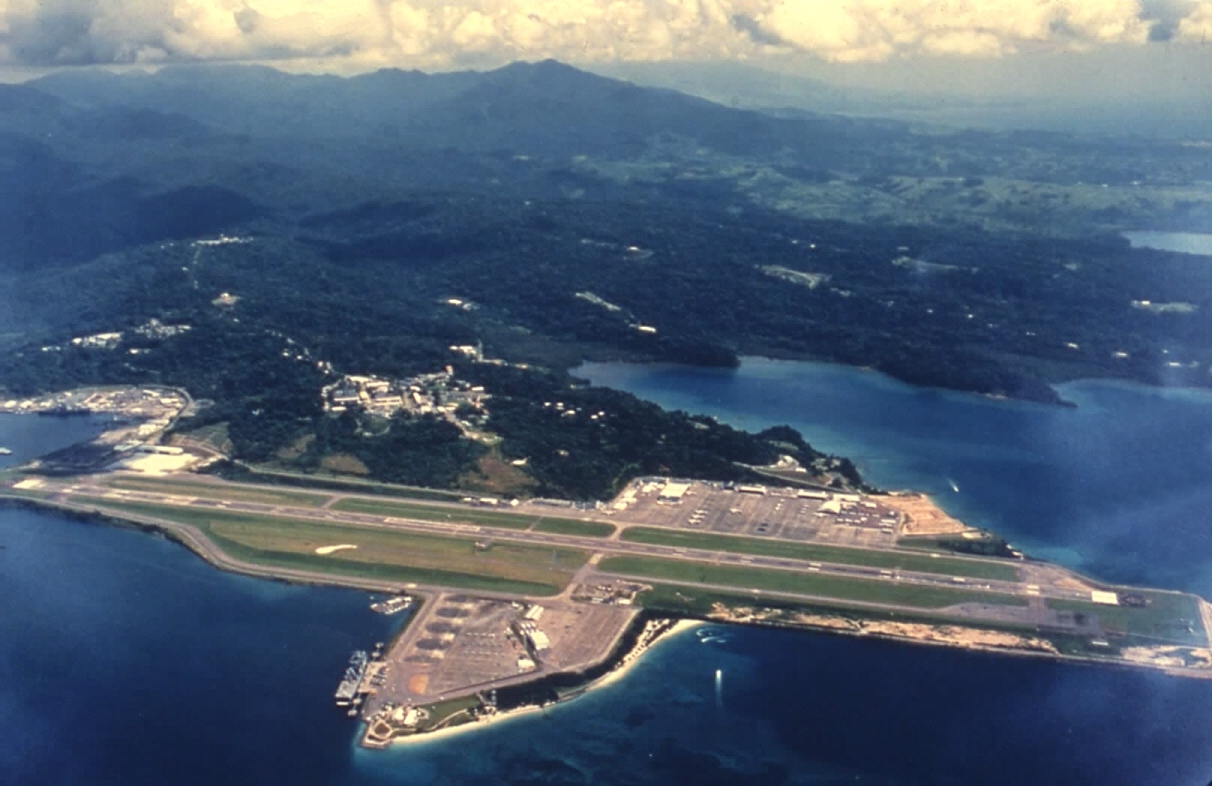
The Vietnamese war changed my view of war and those I saw affected by it.  I was a young teacher assigned to Subic Bay Naval Base teaching art to 4-6th grades.  We were a main support base for the arms for the Navy for the Viet Nam war.  The first year I arrived we were still an active war base.  I met men going to war, and men who came back for R&R.  There were naval officers and enlisted, marines, and civilians all on the base.  The base sat at the edge of the jungle.  All kinds of ships, carriers, and boats were constantly going in and out of port.  There was also a Naval Air Field called Cubi Point which flew missions to Viet Nam.

Cubi Point Naval Air Field   Subic Bay, Philippines
 The base was not large like Clark AFB, but a smaller community of people, so everywhere you went you were surrounded by people involved in war one way or another: t
he dinning halls and restaurants, the movie theater, the base beaches, the BX and

Subic  Bay Naval Base with Carrier at Port
Commissary, the library.  One way or another you met the men going in and out of conflict.  Some needed to tell their stories and some couldn't talk about what they experienced, but just needed to spend time with someone from home.  Many men I met and befriended did not come back from war.  I ate dinner with a fraternity brother of my brother at Cubi point, a wonderful meal and visit.  He was a pilot who was on his way to Vietnam, his plane was shot down not long after and he was killed.

The worse thing about the Vietnamese war was that it was so unpopular in our own country. The men that served did not all volunteer, it was a time of the draft and when  your number came up you went whether you wanted to or not. 

The war was not backed by congress and the nation was in uproar over its purpose and need.  As a result these soldiers, who were like any soldiers in any war exposed to violence and horror, were not respected nor loved by their country.  Today it is hard to imagine. The military is so well thought of, and highly respected today. People are thankful for the their service and sacrifice. 


Letters from home tell about how the country disrespects the soldiers and the war,
this soldier feel utterly rejected and alone.

 from google image for education only


 Not so, during the Vietnamese war.  These men were looked down upon, and shamed upon returning home.  Not only were they shamed, but because of the confusion and turmoil at home and in congress about the war, the men were often left in the field without adequate back up. We were being out fought by a lesser army, and out thought.  Our young men from the fields of Georgia, Alabama, Mississippi, and small towns from West Virginia to Texas died in those jungles and the ones who survived came home to a nation who were ashamed of them and detested them.  The war they were told was necessary, but the country became to believe the war was unjust and rejected it and the men who served there, fairly or not.
  
Australian  troops pinned down in battle    artist unknown    from google for education only
if you know this artist I would like to give him credit.


These men have had a life time of healing to do, not only for dealing with the horrors of war, but managing the shame and disrespect a nation inflicted on them when they came home.  In another war they would have come home heroes, but not this one….and they would suffer and they did. But they were not the only ones who suffered.  Both sides suffered, the North Vietnamese and the land, the animals and all of Vietnam.  People get caught in wars, they just happen to live where the conflict is, whether it is Egypt, Syria, Afghanistan, Iraq, Cambodia, or Korea. No one wins in a war, people die, people are maimed, animals are injured or killed, the land is scared and everyone is marked psychologically forever.  
Viet Nam War           The horrors of war                                    from google for education only


Art helps us see the inhumanity, as in Guernica and the work of the photojournalist below.  Art also helps us to cope with the event, the drama, the pain, and in the years that follow the memories that will haunt those involved for a life time.  Some of the pain was inflicted upon us, and some of the pain is what we inflicted on other human beings.  When we look up close and personal at war and what we did to other humans, whether enemies or friends, it is just too difficult for us to accept that we may be responsible for such horror and violence. 


Art work by Blum


This image below of a little naked girl running down the road being bombed shocked the world of the senseless violence of war that befalls the children caught in the conflict.  These children's village was hit by a napalm bomb which scorches the Earth and every thing on it where if lands.  These children are running from their village that has just been bombed and the young girl in the center has had her clothes burned off of her.  The napalm is like a hot jell that sticks to the body and continues to burn. 


Vietnamese Children running from their village after being  napalmed by US Forces

The story for this young girl does not end here.  I met her years later at a conference in Montreal for Death and Dying Issues( ADAC).  I was with a friend who was attending the conference and was able to attend Kim's incredibly moving speech.  The next day we were eating breakfast in the hotel cafe and Kim walks in by herself.  We invited her to eat with us, which she did.  She then told us her most incredible life story which I will share with you in the next post.  It is a dramatic story, that takes a lifetime to unfold, and it is worthy of us spending more time telling Kim's story.


Kim with her child and showing the scars of the napalm bomb
 In the following post we will continue Kim's story, photo journalists of the Vietnam War, Art related to the war from both sides and at home, and art aimed at healing those who endure the violence of war.

Wednesday, July 3, 2013

The Influence of Experience on the Creation of Art

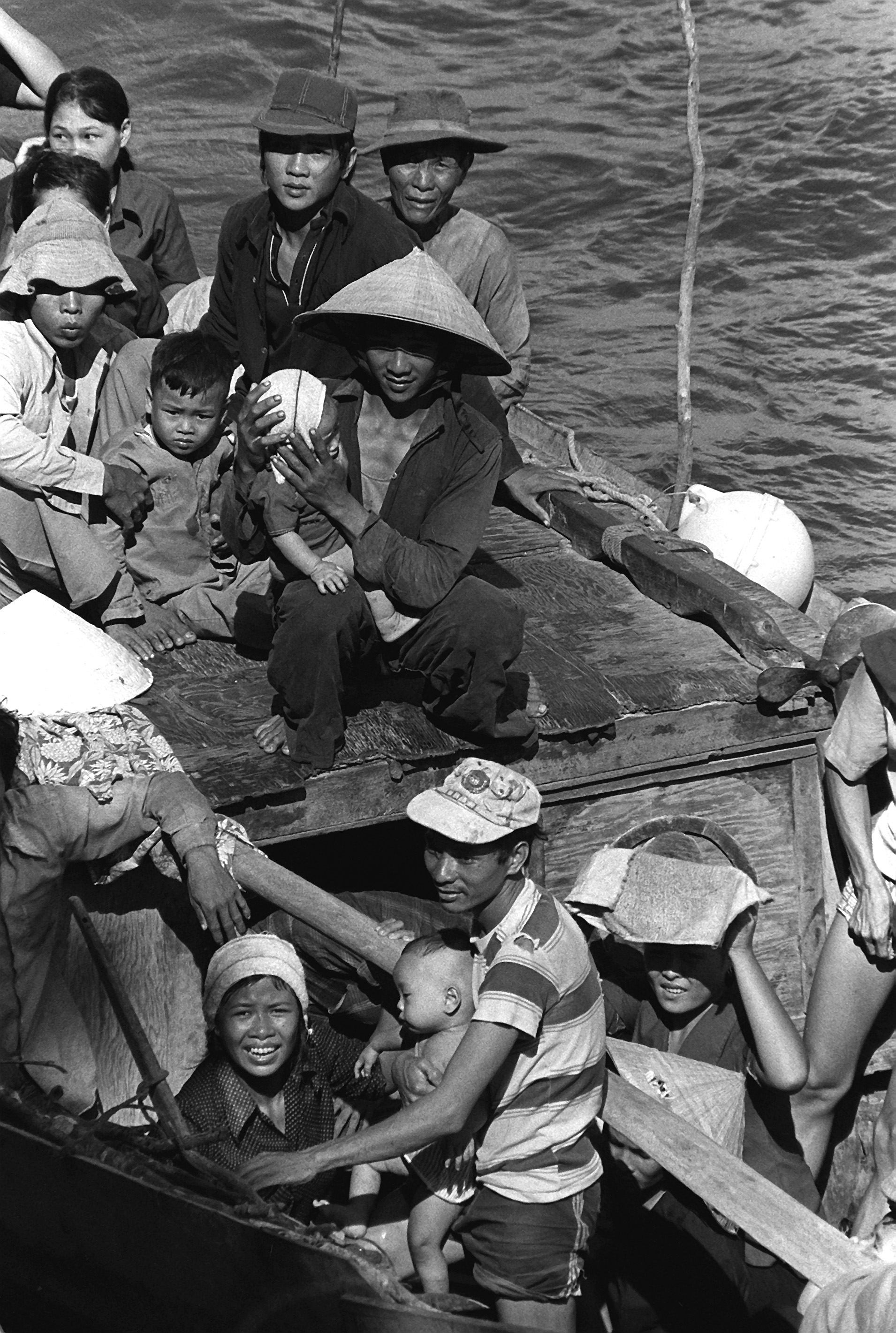
Vietnamese Boat Refugees coming in to Subic Bay, Philippines, google image

The impetus for my assemblage began in an experience I had in the Philippines in 1975 and my life long reflection of what home meant.

The year was 1975. I was a young art teacher in my twenties working for the Department of Defense in the Overseas Education program that serves American Military personnel and their children. My assignment was Subic Bay Naval Base in the Philippine Islands.  The first year I arrived Subic Bay was still an active war base; it was the last year of the Viet Nam war.  Much happened during the three years I taught art there; Marcos, the President of the Philippines declared Martial Law and virtually became a dictator, Imelda counted her 7,000 shoes, and then came the fall of Viet Nam.  At first the wealthier people flew out holding gold bars and people with connections were helicoptered out the last few days. The common person got on anything they could that would float and took out across the South China Sea in desperate hope of escape from war and tyranny. They floated on boat and raft into the bay of Subic Bay by the thousands.  The Philippine Government was sure that Viet Nam would bomb Subic Bay Naval Base that housed all the armaments for the Navy for the war.
Boats so over loaded, they seemed impossible to still be
afloat.
 google image
 They would not allow the refugees to come on the mainland but  they did come to
Grande Island sitting right off the coast of the base.  Teachers were asked to help process the refugees as they came in.  In a period of three weeks we processed 70,000(I have found varying numbers reported, from 39,000 to 60,000, the 70,000 is only from my memory of what I was told at the time) people who were then sent on to 
refuge centers in Guam and the USA.
  
This was one of the most formable times of my life.  I remember clearly asking people questions with an interpreter while they were standing in long lines waiting so quiet it seemed erie.  Frozen in my memory is one woman holding her most prized possession, her tin wash basin! The children cried constantly, and I asked one of the mothers, why they were all crying so much.  She said all their lives they had heard the explosions and gun fire of war, and it was too quiet for them. 

That time marked me deeply, seeing people lose what had been their home, having to leave everything behind they knew and loved.  I began to think about how it would  be if that happened to me, if I were torn from my family, my mother, my home and all I cherished, the desperation and courage it would take to risk every thing to leave not knowing where home would be next.
  
Vietnamese Refugee arriving in Subic Bay
google image
A year later I returned to the United States and returned to teaching in St. Petersburg, Florida.  It was not long after that I was asked to teach at a school that was a center for Vietnamese refugees we were now calling boat people.  The center was to assist children who spoke little or no English in their education and help them adapt to a new culture.  Many of the aides assisting were Vietnamese as well.  It once again threw me into a world of these engaging people that were torn from their country to build a home in a new place and culture.  Many of the teachers aides had been principals, teachers, doctors or lawyers in Viet Nam, but our teachers did not always ask and  just assumed because they could not speak English well, they were uneducated and lower class.  It frustrated the aides greatly, the children were puzzled and I was amazed at the lack of understanding of the American staff.  I think the aides and I began to understand this was going to be the typical reaction they were going to receive in this new culture.  The children were immediately given the message their adults were not respected and therefore they were not worthy either.  

All these experiences left me with the life long pondering of what it would be like to lose one's home and have to build another life. And it also led me to think deeply about the ideology of what home is. Is it a place? Is it people? Is it more complicated than all of that?  The journey is difficult, and acceptance is not guaranteed.  Our country is a country of immigrants and we are a nation of people who have left behind a home we knew to a home we chose.  I remember reading a quote recently written by a British author who when he came to America noticed all Americans had a lonely look and he thought it was a genetic memory of lands and home.  It struck me from this quote, are we inherently unsettled people, who generation after generation have a national unconscious mind of lost people.  It is something to think about.  
In this Surrealistic assemblage you will see many references to home through symbols of different kinds. I will leave it to you to interpret these symbols as your experiences bring you to them. Mine will be different, but I wanted to crack open a door to give you insight into the creation of this piece...Home in many languages.
Elizabeth Gordon

Saturday, May 11, 2013

ABORIGINE ART IS SOME OF THE OLDEST ART ON EARTH

28,000 Years ago an Aborigine Artist drew and painted on a rock!


From google image for educational purposed only

A recent discovery in Australia had dated the one of the earliest painted art on Earth.  The Star News reported that archeologist discovered this detailed painted rock in a remote region of Austraila. Following is a section of the article from the Star, to read more, click on the highlighted blue text below.
"

THIS intricate rock painting is thought to be one of the oldest in the world after it was dated to 28,000 years ago.

The charcoal piece, discovered at a remote site in Australia, is some of the earliest evidence of human painting.
The Aboriginal artwork was found last June in Arnhem Land in the country's Northern Territory but was dated only recently by experts from New Zealand’s University of Waikato radiocarbon laboratory.z"


Read more: http://www.thesun.co.uk/sol/homepage/news/4379804/Aborigine-art-among-oldest-ever-found.html#ixzz2Syv0KQDX


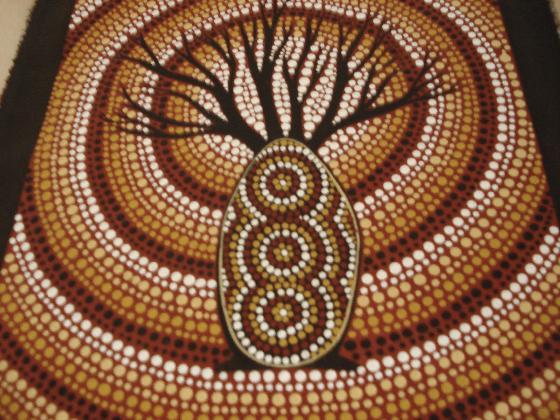
An interesting story about Aborigine art comes from a trip I took to Sidney in the 1970's.  I was a young art teacher working on Subic Bay Naval Base in the Philippines and went with a group of teachers on our spring break to Sidney for a vacation. While I was there I got very interested in Aborigine art and bought several bark paintings.  I kept them in my art room for example when teaching art to young children.  I would pass the paintings around and let the children feel and hold the bark paintings. We did large units on Aborigine art and the children did their own Aboriginal art.  It was not until recently I discovered these old works were worth a great deal of money and here I had  been just letting them be handled by kids and not so gently I might add...if you know kindergarten and 1st graders..you know what I mean. Wow, what a surprise for me.  The only sad part, is the names of the artist that were on the back fell off years ago, so I can't identify them anymore.  They are quite wonderful though. The other sidelight is I came home from that trip with pneumonia and was delirious when I got off the plane! It was a memorable trip in more than one way. 

Friday, September 21, 2012

HOW LIFE EFFECTS ART
A PERSONAL EXPERIENCE

The Philippines 1972-75 
Journey to the Rice Terraces of Banaue 
Igorot Tribal Territory
Head hunters still active

I was a young art teacher working on Subic Bay Naval Base in the Philippines in the 1970's. I lived in the city of Olongapo off base with another teacher sharing a house on the side of a mountain.  I chose to live off base to live in the community and to get to know the Filipino people and culture better.  My friends and I were mostly in our twenties and some older, but all curious and open to learning about the world and other cultures.  I say that, because many Americans that were in the military, chose to stay on base as if it were an Island isolated from the world they lived in..never leaving, never interacting with the people or country they resided in.  Our group traveled widely and experienced all with open arms and with great delight.  
Halsema Highway to Banaue  google image
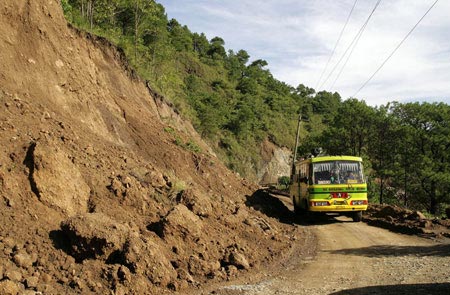
Bus on narrow dirt Halsema highway google image
On this one trip we went to Baguio in Northern Luzon.  There was an American R&R for the military personnel, but it was also a beautiful cool mountain city with fantastic open markets with fresh vegetables and exquisite crafts.  From there we booked a trip to the rice terraces of Banaue.  We were told the trip was arduous and long on the Halsema road ( Halsema must be one of the worst highways in the world. I must say that I agree with him. Quote: “There are many accidents and overturned buses on a yearly basis. Often there are sheer drop offs of over 1000 feet without a guard rail. During the rainy season it is nearly impassable.”) and that we would be driving through head hunting territories ( warning, graphic picture in link) that were still active....but we were told it was our good luck it was not the right time of year to take heads! As we drove through the country side the mountain roads twisted more and the elevation got higher and higher.  At one point the road was so narrow it only allowed for one way traffic.  We were stopped at the base of the mountain in a small village where they radioed ahead to stop the cars at the top.  It took over an hour of waiting for the last automobiles to come through. While we were waiting I decided to take some photo's of the people and village from the car (as we asked not to get out).  It was not a popular decision, as the locals decided the camera would steal their souls.  The people began throwing rocks at car. In the nick of time the gates lifted and we were off.  The road was narrow, dirt and hugged the mountain. At one point huge rocks blocked our path and we all got out to help our driver push the bolder's over the edge. Later we encounter a bus full of nuns that were on their way down the mountain that had gotten stuck..they blocked out path and there was no getting around.  So the driver of our car got out and begin to try to help...with lots of effort from many people standing precariously near the edge on the steep slippery cliff of the mountain...the bus was unstuck and the Nuns were on their way again.


Banaue Rice Terraces                                                  google image

We finally arrived in the very remote village of Banaue. The first day was market day, where the most awesome of weavings were sold.  My goal as a twenty year old American had been to go to the most remote areas untouched by western civilization and see indigenous cultures.  I was so pleased, I thought I had achieved that in this head hunter village as I was being stared at by a barefoot
Ifugao man with the barest of covering, and wearing his human vertebrate necklace! And 


Ifugao Man  google image

then I looked up, and on the side of the mountain was the largest Coke sign I had ever seen!  I was stunned...there was no other signs anywhere, no advertising, but here was this red huge Madison Avenue affront.  So began the first conceptual art piece I ever did....Pervasiveness Of Culture.  It was a montage of Coke ads and photo's of the Igorot peoples.

Ifugao Weavers                 google
There was much discussion during the time I lived in the Philippines about the influence of Western culture that was obliterating the culture and belief system of Filipino's...and not for the good.  As there has been world wide also, and the discussion continues.  When does one culture have the right to dominate others?  
Related Posts Plugin for WordPress, Blogger...