Sunday, May 4, 2014

WHERE DO ARTIST IDEAS COME FROM?

I wanted to share more of my thinking process with you for my new assemblage and most of this is visual.  My mind is like a magnet now attracting and storing the ideas I need.  Some just hit me in the gut and feel right and others intrigue my interest.  There is a wonderful blog/website out of Paris by a London young woman that is really informative and fun.  It is called Messy Nessy Chic.    She seems to find the most interesting, funky, odd, quirky yet totally cool things to peak ones interest and write about.  I believe I found the site originally on Facebook, but it may have been elsewhere.  This last post was fascinating to me for many reasons.  Firstly, I saw something that peaked my interest for my assemblage and secondly how art used to be so totally embed in a culture that is was not assigned a separate place and called art…it was part of everything and so intwined it could not be cut away.

Many early cultures lived their art.  In cultures that are still intact today we still can see that evidence of art that is lived.  This series of photos and text source comes from Messy Nessy Chic. 


The braids are called Eembuvi braids and they are worn by the women of the Mbalantu tribes from Namibia.  At 12 years old the girls start the preparation using ground bark and oils. 


African men with leg designs  photo by Eric Lafforgue  


Below are the painted leg designs of the Bashada warriors.
It is these photo below that caught my interest for my assemblage.  I had in mind a blend of tribal and modern…and this brings it together in found objects, making use of the refuse and thrown away, finding something precious in worn objects that have had a life before.  This young Dassenach woman is wearing a wig made up of cola and beer caps she has gathered.  Beads, watch bands and other metal finding seemed to have been added also.
Dassenach Tribal Girl with coca and beer cap wig, and other added items
from google image …..photo by Eric Lafforgue
from gouge for education only


In this photo of an elder Dassenach tribal member old watches seemed to make up the treasured parts of his wig and bottle caps.  I rather like the feather on the chin also. Nice touch.
And the one below of the little boy is so charming.  I love the little seed pod or objects in the bottle caps. They could be wooden beads as well, I can tell.  The added burlap top and wooden objects ads another texture and high relief to the wig.  My mind is now building up a mini library of ideas to incorporate in my work.  So far now this is what is leading me and gathering me in towards a working plan.  But I must leave my mind open for other possibilities as they come.  For I need to explore American Indian designs and ideas as well as South American and other cultures.  And then this idea of a video loop keeps coming to mind…how will I incorporate a repeated video image into the assemblage and what would be on that image?  Something is drawing me to consider that and to research it.  


Saturday, May 3, 2014

BEGINNING THE PROCESS OF MY ASSEMBLAGE

Today was a random planning day.  My mind is now open and attuned to the art work I want to do and I begin to nice all kinds of connections and influences entering my mind.  I may be on the internet and an article or picture jumps out at…hmmm this might work or I had not thought of this.  It is like opening a door a crack and the light begins to pour in, and the door opens wider and wider. It is almost as I have given my mind permission to seek out its ideas, and it roaming on an unconscious level on my behalf…like spy ware!

What Artist Do All Day Long

When I am thinking about my art and what I am going to do, I think about what do other artists do.  How do they approach their art, what do they think about all day long, how do they think,what kind of decisions are they making consciously and unconsciously and are they more planners or thinkers. As I listened to this video about his stream of thought, it sounded so familiar to me.  We, as artists, can ask a million times where do our ideas come from and perhaps not know?  We can attribute our ideas to ourselves, our education, our brilliant minds, and many other things, but I think there is one thing common for all artists whether they be visual artists, writers or musicians so much of what we do is intuitive. Most of us are highly intuitive beings and the more we trust that process the more successful we are. I certainly know that is true for me.  
I literally turn my mind over to the intuitive self and I follow the thoughts as they come. It is a journey and I may think I am going in one direction and it can lead to quite another.  Now, you may say this doesn't seem rational if you are a concrete thinker, a planner, or a person who must know the direction they take.  I will tell you it is as miraculous as a runners high, you enter another realm where time stands still, hours go by as minutes and it is a very special place to be.  What it takes to get there is different for different artists, some must suffer, some must escape to themselves, and others drown themselves out with music or drink.  For me it is just waiting until this certain place in my mind opens up, and then I start thinking, and planning a bit, once I have all my materials around me, I start.  It is series of experiments, put this together, move this, put this on top of that, add this, no take it all away…now try this…and it is a dance with creativity and until the stream leads into the river and into the ocean.  Then click, all is right and it is done.  
I will post several of these for you to look at and we can look at how different artists approach their work.  Many of you may be more craft oriented, folk art, abstract, surrealist, or bend toward another style, but I think it is incumbent upon us to consider all, to view all, and learn from all.  So lets begin our journey with Norman Ackroyd's video below…click on arrow to begin.


Friday, May 2, 2014

TIME TO START ART

I am gathering my objects for a new assemblage.  It takes me awhile, this process of mine.  Things seem to cook awhile in my mind before they are ready.  Now I gather, then I think, then I research, then I start the dance of creating.  Every artist has their own way, that seems to be mine.  Here are the gathering of objects I will begin my work with. I will take you with me as I progress on this assemblage for an upcoming show.

Hat form

various old wooden and rusted items and old English ship building forms

Palm fibers

Computer board, Turkish hassle , rusty things

Old gas mask

wooden shoe form and crow

Piece from a friends solar water system

ship building form

old metal funnel


Artist Quote

"The object of art is not to reproduce reality, but to create a reality of the same intensity."
  Alberto Giacometti


from google for education only

Thursday, May 1, 2014

ART IMPROVES QUALITY OF LIFE FOR STROKE SURVIVORS

ART THERAPY IMPROVES LIVES AFTER A STROKE


Berlin/ Stroke Art Festival           from goog


A study done in Copenhagen  in 2012 showed that stroke survivors who like art had significantly higher quality of  life than those who did not, according to new research.  Patients who appreciated music, painting and theater recovered better from their strokes than patients who did not.


Eugene Brown  shared his belief for years that art therapy improved
stroke patients .                                              from google
Patients interested in art had better general health, found it easier to walk, and had more energy.  They were also happier, less anxious or depressed, and felt calmer.  They had better memory and were superior communicators( speaking with other people understanding what people said, naming people and objects correctly.) Dr. Vellone says: "Stroke survivors who saw art as an integrated part of their former lifestyle, by expressing appreciation towards music, painting, theatre, showed better recovery skills than those who did not." 
In the photography above is Eugene Brown who shared his belief for many years with others that art therapy improved stroke patients lives. 

Stoke patients in Manchester, England show their art works.


Manchester England                  Art show of Art Patients
Tamside Artist group  in Manchester worked with stroke patients to do art and put on their own art show.

 The video below shows using art therapy to help stroke patients recover.  Just clink arrow in center of screen to watch.


Sunday, April 27, 2014

Rabbit's Moon studio: A STROKE OF INSIGHT

Rabbit's Moon studio: A STROKE OF INSIGHT:  Part 1 of a three part series OUR ART IS AFFECTED BY OUR PERCEPTIONS OUR PERCEPTIONS ARE DETERMINED BY OUR BRAIN FUNCTION AND OUR BR...

A STROKE OF INSIGHT

 Part 1 of a three part series

OUR ART IS AFFECTED BY OUR PERCEPTIONS

OUR PERCEPTIONS ARE DETERMINED BY OUR BRAIN FUNCTION

AND OUR BRAINS FUNCTION IS DETERMINED BY ITS STRUCTURE, ITS HEALTH, AND ITS INJURIES


DAVID HOCKNEY AND CHUCK CLOSE


David Hockney, British           from Google


Chuck Close, American        from google


are two artist who have continued to produce art after having    severe disabilities.  David Hockney had a stroke and Chuck Close suffered seizures that paralyzed him from the waist down.  Brain research and function is fascinating, especially if one is an artist.  A recent article in the Guardian about David Hockney  renewed my interest in this area.

THE TERM A STOKE OF INSIGHT COMES FROM A BOOK 
My Stroke of Insight by Jill Bolte Taylor.

Click on the arrow in the center of the screen below to watch
video of Jill Bolte Tayor speaking brain function.


The book was written by a Jill Bolte Taylor who specialized in research of neurological effects of people who experienced strokes.  Then she had a stroke of her own.  After her recovery she wrote a book called, My Stroke of Insight. She talked about how her brain functioned differently after the stroke. Her perceptions were different, her sensations were different, and her ability to stand stimulation. 
I became very interested in how the brain functions many, many years ago when I was teaching special education.  I taught, blind, deaf, autistic and severely mentally handicapped students.  In one way or another some senses or all were effected in this students.  I had children who were idiot savants and could do the most amazing things, like give the day of a chosen day into the future or past in seconds.  One part of their brain functioned at an abnormally high rate. I also had students who had a mental capacity of 3 months old or less, but in actual age may be up to 19 years old.  I wanted to know how the brain would still function at the lowest levels and how.  I found out some amazing things in those years.  I was surprised myself, at what choices a person of the most limited intelligence could make and how their personality was still very much intact.  I had one profoundly handicapped student who was about 17.  It took me and two aides to help her to manipulate her limbs to do art, but she consistently chose cool colors…green, blue, purple…month to month, year to year.  She had a decided preference for cool colors and she had a talent for art, even in the most basic form.


My Mother, Lela and me
Moving forward years later, I am as I neared the end of my art teaching career  my Mother had a  stroke.   My Mother had a massive hemorraghic stroke, which is like a  deep, bleeding in the center of the brain.  She could read not long after the stroke, but she was not able to attach meaning to the words. Strokes seem to run in our family, my Mother's Mother had a stroke and then my Mother.  My two cousins both have had several strokes.  It is devastating to see in someone you love, but it also made me thing deeply about the brain and what a person experiences, what they feel, what they sense and what they remember.  I think the scientist in my Mother would have been proud of that. I was taught to observe and analyze growing up.

David Hockney's(click for article)
article in the Guardian is one I wanted to share with you.

"I had had a very minor stroke that had kept me in London, and the first drawing afterwards took me two days to do (the days are a lot shorter in November). The stroke only manifested itself in my speech. I found I couldn't finish sentences, and although it came back after about a month I find now I talk a lot less."
"But it did not affect my drawing. I think it even made me concentrate more. I thought, well I'm OK so long as I can draw, I don't really need to say much any more; I thought, I've said enough already."

David Hockney's Yorkshire Spring Drawings after the stroke           from google image only for educational purposes

Chuck Close


Detail of portrait on right    from google


Chuck Closes work after accident
It is much more highly pixilated and abstracted.
I find it almost more interesting than his previous
work.

Though Chuck Close did not have a stroke, the seizures and paralysis no doubt have affected his thinking in many ways.  He has found ways to compensate and overcome his disabilities.  In some respects his art is more interesting now than ever.
Chuck Close after Spinal Collapse still a master!
from google image


"In 1988, Close again experienced the trauma of a severe health issue when he suffered the sudden rupture of a spinal artery. In the immediate aftermath of the incident, Close was left almost entirely paralyzed. Eventually, after rounds of physical therapy, Close, who became permanently confined to a wheelchair, regained the partial use of his limbs.
Despite the physical limitations, Close pressed forward with his work. With a brush taped to his wrist, Close continued to paint, but in a style that was more abstract and less precise. His reputation and standing have not suffered in the least"  Quoted from Wikapedia

Saturday, April 26, 2014

ARTISTS BRAINS MAY BE STRUCTURED DIFFERENTLY!

Artists Brains May be Different


From google image for education purposes only

Now before all the jokes start about artist are weird and their wires are probably crossed lets look at some of the later thinking in brain research.  Below is a partial statement from and article written for Hyperallergenic… click for whole article.

(Artists are often deemed “right-brained” thinkers, but new research suggests it may be the actual structure of the brain that lends creative talent.
Drawing on the right side of the brain: A voxel-based morphometry analysis of observational drawing” was published last month in the peer-reviewed neuroimaging journal NeuroImage. As the study states, ”structural brain differences in relation to expertise have been demonstrated in a number of domains including visual perception, spatial navigation, complex motor skills, and musical ability. However no studies have assessed the structural differences associated with representational skills in visual art.”) 
I find this fascinating because of growing up I knew my brained worked differently, but it took a long time for me to understand this and how to learn in the ways my brain would function.  Many SLD classes, most art teachers will tell you are people who are just visual learners.
Any number of children struggle in school because the teaching modalities do not fit their learning style.  It is time we look at the newest research and see how we must structure our learning for and how.

Monday, April 21, 2014

BEST CITIES TO SEE STREET ART

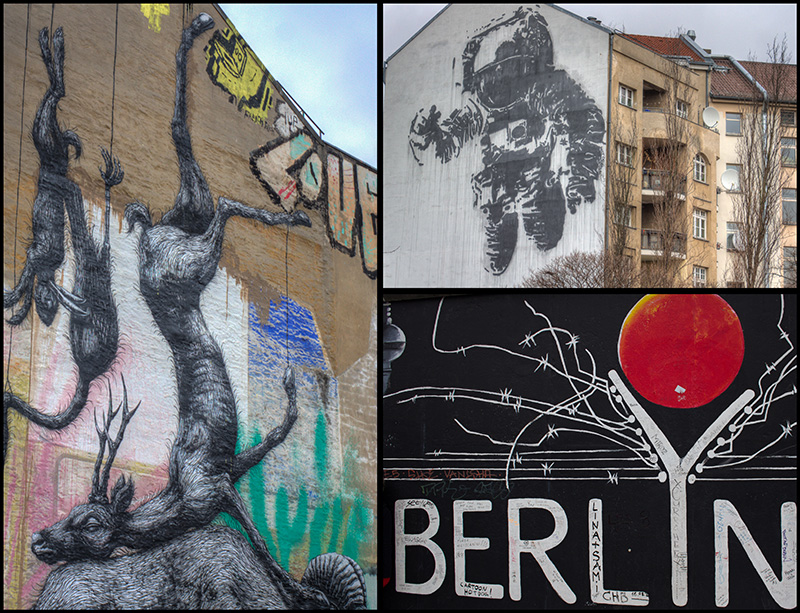
Huffington Post Art has put out a list of the 26 Best Cities to see street Art.  Here is the link for you_ Best Street Art Cities


BERLIN, GERMANY


SAN PALO, BRAZIL 


CAPE TOWN, SOUTH AFRICA


Melbourne, Australia 


MOSCOW, RUSSIA


                                             *all images are from google image only for educational purposes

There are many wonderful cities not mentioned in Huffington Post Arts, one of my favorites not mentioned is Philadelphia, Penn.  They have three separate full day tours one can take to see the huge number of excellent murals done there.  
So if you city is not mentioned please send me a post and I will be glad to include them in the blog.  My aim is art education, supporting artists, and art advocacy. 


New Work in Preparation of an Assemblage

Trying different raku glazes for color and texture.
The first mask has a green glaze that turns copper like in many areas that do not receive as much oxidation, while the white crackle has large areas I masked off with wet paper, which burns off in the firing, giving large areas of charcoal black with white crackle.


Friday, April 18, 2014

LOOKING AT LIFE ON BOTH SIDES NOW!

WE WERE RIDING THOUGH ASHEVILLE
 AND IT STARTED TO RAIN
A COLD FRONT COMING THROUGH


 I WAS WAITING IN THE CAR
 WHILE ERRANDS WERE BEING DONE
 AND GOT A LITTLE BORED. 

I LOOKED OUT THE CAR WINDOW 
AND HOW THE RAIN DISTORTED THE VIEW.  


 I LOVED THE WAY IT MADE ME LOOK 
AT FAMILIAR OBJECTS IN AN ABSTRACT WAY


 IT TOOK ON SOME THOUGHTS OF MONET, 
AND OTHER FRENCH IMPRESSIONIST AS WELL,

MONET

CAILLEBOTTE


IT IS SO IMPORTANT TO TAKE TIME WHEN YOUR INNER ARTIST SAYS " HEY, I HAVE AN IDEA".  EASY TO IGNORE, EASY TO MISS A MOMENT THAT CAN BE LONG GONE, AND NOT BORN.  

STOP 

TAKE TIME

 CREATE

 BE IN THE MOMENT 

THINK 


PS.  Photo's taken with little point and shoot Lumix by Panasonic.  Love this little camera. It has a leica lens and 20x zoom, but fits in my pocket.

Tuesday, April 15, 2014

Rabbit's Moon studio: PHOTO JOURNALIST, BRAVE ARTIST

Rabbit's Moon studio: PHOTO JOURNALIST, BRAVE ARTIST: Continuation of Vietnam Photo Journalists, Artists at War MALCOM BROWNE'S PULITZER PRIZE WINNING PHOTO FROM VIETNAM The Burning M...

Monday, April 14, 2014

PHOTO JOURNALIST, BRAVE ARTIST

Continuation of Vietnam Photo Journalists, Artists at War

MALCOM BROWNE'S PULITZER PRIZE WINNING PHOTO FROM VIETNAM
The Burning Monk by Malcom Browne  Pulitzer Prize Winning Photo      from google for education
Malcom Browne

Malcom Browne's iconic photo of a monk setting himself to flame, and burning himself in protest of the Vietnamese war, was one of the most famous images to come out of the Vietnamese conflict.  The act of the Monk's immolation is a horrible event and to capture it in such detailed form as it actually happened was shocking to American's and the world. It makes me want to know more about the story behind this picture, and I imagine  you might feel the same… What would bring someone to the point of burning themselves in protest and why!?

Sculpture of Thitch Quang Duc, The Burning Monk
Saigon

To understand more about the story I researched the internet and found this reference below: " On 10 June 1963 Buddhist Monk Thich Quang Duc set himself on fire in protest over the governments treatment of Buddhist Monks in Vietnam.  After reading the article about Malcom Browne and the Burning Monk i wondered if there was a monument of Quang Duc in Saigon. I wasn't expecting to find anything as there aren't as many war monuments as I thought there would bek


"On 10 June 1963 Buddhist monk Thich Quang Duc set himself alight in protest offer the governments treatment towards Buddhist.  After reading the article about Malcom Browne and the burning monk I wondered if there was a monument for Quang Duc.  I wasn't expecting to find anything as there aren't as many war monuments as I thought there would be in the city.  So I was surprised to find one of the most impressive memorial parks to one person I have ever seen." quote by James Clark from article on photo journalists of Vietnamese War.

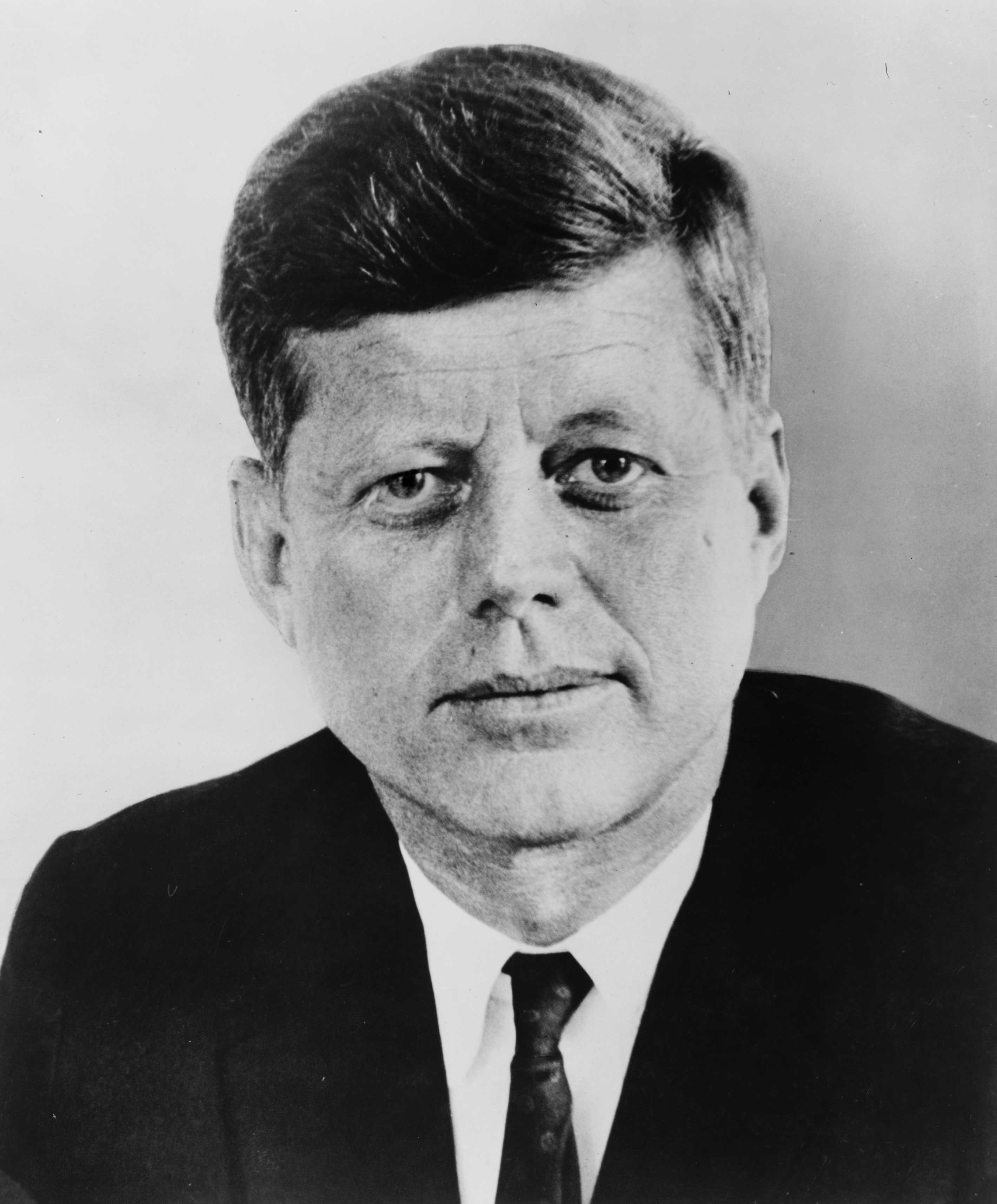
Upon hearing of the event President John F. Kennedy said, " No news picture in history has generated so much emotion around the world as that one". U. S. Senator Frank Church claimed "sush grisly scenes have not been witnessed since the Christian martyrs marching hand in hand into the arena  into the room. 


In thinking about this famous photograph by Malcom Brown,
Art is so often a expression and a reflection of the culture and time we live in.  I think in this time, the Vietnamese war, we see a conflict of cultures within the country and other foreign influences as the United States. I will leave it to you to contemplate the complexities and meanings that may come forth.  There were so many independent factors from individuals to the government.  All these paths led Malcom Browne that day to this spot to record history in one iconic photograph and a resulting sculpture and park. Without the exquisite talent of Malcom Browne and without the sacrifice of Thitch Quang Duc none of this would have been known to the world nor immortalized in a bronze sculpture for all times.


Thursday, April 10, 2014

BRAVE AND ARTIST

THE PHOTO JOURNALISTS OF THE VIETNAMESE WAR
 
    "GOOOOD MORNING VIETNAAM!"
                             BY ROBIN WILLIAMS


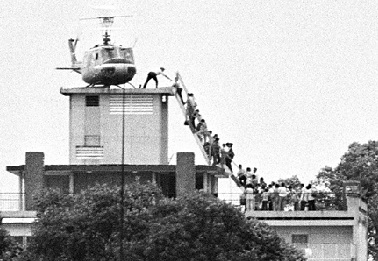
Iconic Image By Van Es, Photo journalist of Vietnamese War  The Last Helicopter Leaving Vietnam
    from google for the sole purpose of education and art advocacy

" Like Van Es, many of us who covered the war found ourselves forever in the grip of Vietnam.  No other story, no other war, quite measured up.  The exotic charm and dangerous undercurrents of Saigon were seductive, the adrenaline rush of survival intoxicating. We hitchhiked around the country on military helicopters and roamed the battlefields without censorship.  The Associated Press lists 73 of our colleagues as killed in South Vietnam, Cambodia, and Laos, yet as individuals we felt invulnerable" by David Lamb, Smithsonian Magazine

The photo journalist is part documenter, reporter, and artist.  They must have the skill of a professional photographer, the ability to be a news reporter in the field, and an artist in the images they capture.  And in addition to that they had to have nerves of steel to go into the jungles, and rice patties, on the front line where the battles raged.  
Vietnam was the first war censorship was not a factor, as in World War II and later wars.  It opened up freedom to the taking of photo's that revealed the true war and the conditions our soldiers were enduring.  It allowed the truth to be told in black and white pictures in the press daily.  Moving film was sent daily into the living rooms of Americans across the country and the ever famous body count.  

Photo Journalists in the Vietnamese war(click for more info.) 
were remarkable men who risked their lives, many died trying to get the right picture to show the conflict, the confusion, doubt, violence, and despair of the men who fought this war and the tragedy of war on both sides. Who are some of these remarkable men and what photographs are they known for?  Lets take a look at a few. Every name is clickable to link you to more information on each photo journalist. Not all photo journalists will be covered in this post, we will continue until we have covered the most mentioned of the period.


Poster Protest Art of the Vietnamese War at home   from google for education only


Poster Art from Army Recruiters    from google for education only

I thought we would start with a film from You Tube which shows the feel of this war for the soldiers, news reporters, and photo journalist.  To appreciate what they did to report the war and risks their lives for the photographs they took it is important we put ourselves back in that time and place. This film does that fairly well.  It is a long video, you may want to watch parts and come later to the whole film. I think the absolute violence of war is beyond anyones understanding unless they have been there, but film and photo's help bring it closer for us to understand.  I remember being absolutely riveted by the opening scene is Saving Private Ryan, where the sounds and speed with which things happened is almost unbelievable. Film below…..


Eddie Adams

                   Eddie Adams            from google sole purpose is education


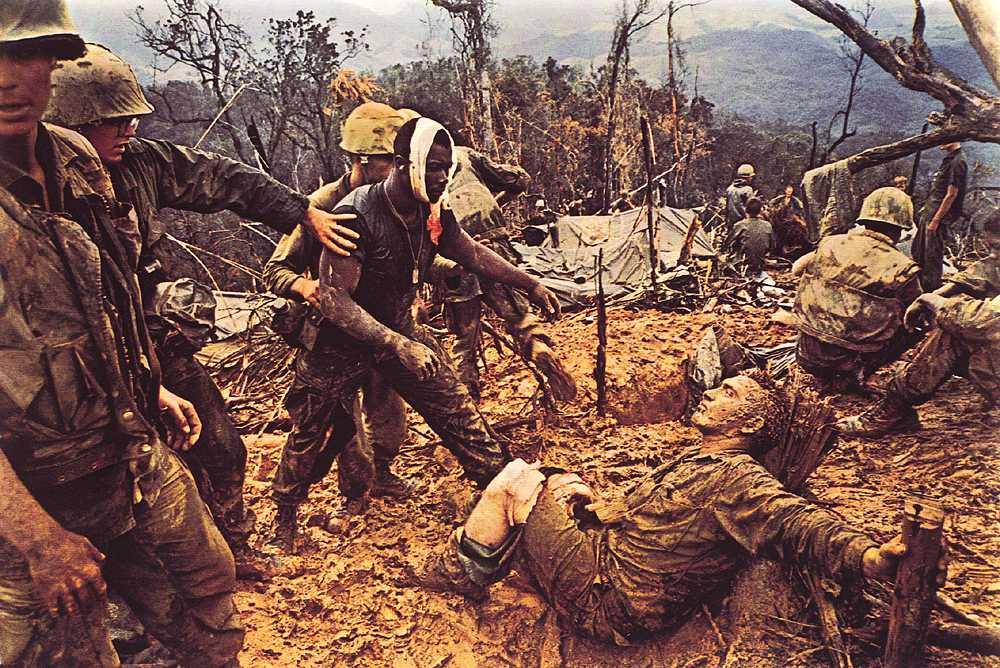
Larry Burrows
                                                                                                                                       
      Larry Burrows photo is worthy of Renaissance painting of drama and choreography
   From google only for education
Van Es
                                                   Van Es        from google only for education
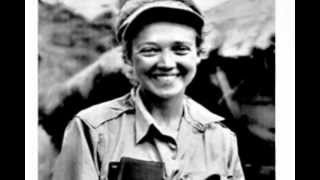
Dickey Chapelle


Dickey Chapelle Photo      from google only for education and art education
"Dickey Chapelle covered the battles of Iwo Jima and Okinawa for National Geography, was captured and jailed for seven weeks covering the Hungarian uprising for Life. In the meantime, she learned to fly an airplane and jump with paratroopers. She arrived in Vietnam in the early '60's and described her early experiences in her 1962 book "What's a Woman Doing Here?" On November 4, 1965 when on patrol with a Marine platoon, the soldier in front of Chapelle activated a booby trap( a mortar shell with a hand grenade The explosion hurled Chapelle off her feet, and a piece of the shrapnel slit her carotid artery, wounding her mortally."

Dick Ut
Dick Ut Iconic photo of Kim Phuc after Napalm bombing  
 from google for education only
The video below is from Rolling Stone Magazine, called Paint it Black. It shows the division and frustration of a nation at war.
The music and art of the period reflects the culture and mood of the times.  


Click here for a list of songs about the Vietnam War

Click here for a list of films about the Vietnam War


Horst Faas

Photo by Horst Faas      from google for education only

Fred Waters
Fred Waters Photo from google image for education purposes only


Frank Capa

Frank Capa famous WWII photo journalist went on
to Viet Nam where he lost his life.
from google image for education only
"While collectively news photography from Vietnam 

constituted a potent archive of a new kind of photography suited to a new kind of war and produced imagery that challenged the ideology and course of the American mission, a great deal of work was produced as spot news imagery with a conventionalized form of professional practice.  


There were, however, notable exceptions, photographers who worked more self-consciously to push the boundaries of photojournalistic practice.  Their work reflects on the contexts and scenery of war and, while these had varied motivations and were often constrained by the broader media and state frames, they did develop the genre of photojournalism, adapting it to new conditions of warfare and technological production.  


These photographers produced a more meditative form of photojournalism, an afterimagery of conflicts and contexts, bound not to spot news reporting but to a more investigative framing of events.  I am thinking here of photographers such as Larry Burrows, Philip Jones Griffiths, Don McCullin, Catherine Leroy, Kyoichi Sawada and Henri Huet. 


 In Vietnam, photographers had opportunities to develop a fresh visual awareness about war and its representations, especially those who stayed for long periods or who came with investigative intent.  Within the mass visual coverage of this war were examples o


f this new awareness, the work of photographers reflexively attuned to the style and ethos of their work as a subjective register of their relation to the war.  These photographers opened up opportunities for a more expressive form of documentary representation and influenced the style of a new generation of photojournalists who emerged to prominence in the 1970s and 1980s."


 article source and quote from Liam Kennedy, Clinton Institute


Propaganda Art from Vietnam       from google for education

Louis Armstrong…what a Beautiful World in concert in Vietnam
click below.


Related Posts Plugin for WordPress, Blogger...